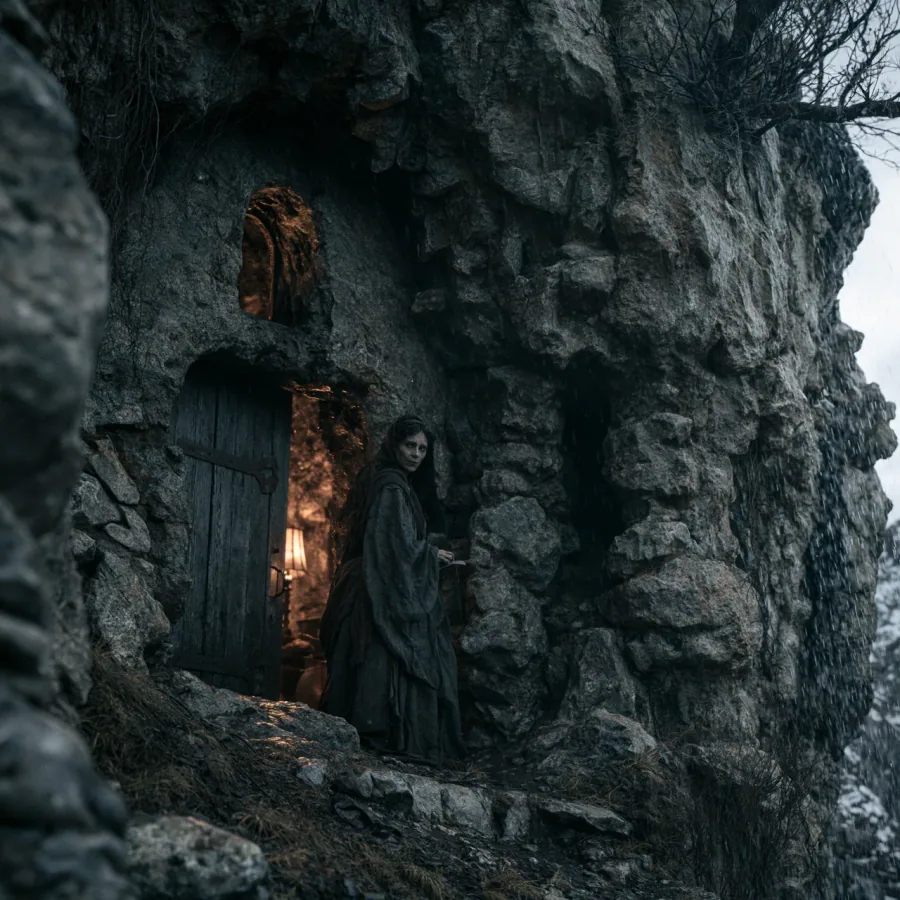
Auren of a small village three days east of Darklume was sixteen when the flame found her hand. She had been called Auren before; she would be called Auren of Embers afterwards, and never, in any record made in her brief participation in the chronicle, by any other name. She was the kind of girl no kingdom kept records of. Her father was a shepherd. Her mother had died when she was nine. She had two younger brothers and an older cousin, and her work, by the morning the flame caught, had been to draw water from her father's well at first light, every morning, for seven years.
She was small. She had pale hair that the eastern wind kept cut short. Her hands were the hands of a sixteen-year-old shepherdess, calloused at the palm and unornamented at the wrist. She had not, in her life, been to a city. She had not, in her life, been to Darklume. She had heard of Darklume in passing — the cathedral they kept open on certain evenings, a relic of older centuries, a curiosity to be respected and, in her father's view, mostly ignored.
The morning of the flame
In S14, on a morning that had not yet learned to distinguish itself from any other, she drew her bucket from the well as she had every morning since her mother's death, and the bucket came up with a small steady flame inside it. The flame was not floating on water; the water was not boiling. The flame was simply in the bucket, the way water was in the bucket, the way nothing else had ever been. It did not hiss. It did not consume the wood of the bucket. It looked, the chronicler is careful to record, like a flame.
She did not scream. She did not drop the bucket. She had been raised, in the way of shepherdess girls, to be slow to react to things she had not understood, and the flame had not yet, by any test, harmed her. She lifted it. It came into her cupped hand. She walked it home — three quarters of a mile, in plain morning light — and fed it to her father's hearth, where it joined the ordinary fire and behaved, for the rest of that day, as ordinary fire did.
She told no one. She did not yet have a vocabulary for what had happened, and she suspected — correctly — that any vocabulary she found in her father's village would diminish the thing rather than name it.
What she carried
The flame was Grandex's. Phaeren the Burned, two days before, had passed eastward through the downs in his fury to find Drexel directly, and a piece of the archangel's fire had separated from Phaeren's wake and settled, by mechanisms the chronicle does not pretend to fully describe, into a place — a well, a girl, a hand — that could briefly hold it. The chronicler, observing the chain of cause, declines to call it accident and declines to call it arrangement. The chronicle has, by S14, learned that the celestial does not always act in either category.
The walk east
She kept the flame, between her hand and her father's hearth, for two weeks. At the end of the second week she packed her father's smaller travelling sack, took her brothers' goodbye without telling them she was going, and walked east toward Darklume. She did not know, when she set out, why she was going. She had begun, by the third day, to understand that the flame had been calling, and that her work was to bring it to whoever's voice it was answering.
The cost, and the paying of it
Phaeren the Burned, when he met her at Darklume in S16, told her — without softening — that the flame would take more from her than it gave. She accepted this without argument. She had, by then, already begun to feel it. Her left hand was the first thing to go, in a small slow withdrawal of feeling that she did not immediately mention. Then her left arm. By S19, when Maelis brought her column to the cathedral gate and Auren was asked, at the altar, to spend the flame in defence of the building, she had been carrying the rent of the flame for a season and a half and had not, at any point, asked to be relieved of it.
She opened her hand. The cathedral filled with light. Maelis's column dissolved. Grendar the Bound was unmade, and was grateful in the unmaking. Auren, kneeling at the altar, looked up at Phaeren — who had not spoken to her since the lesson — and said, in plain words, thank you for being honest. She died before he answered.
She had been, in the chronicle's reckoning, the first true mortal-touched of her generation. The kingdoms had been waiting, since Kryor's S0 descent, for a mortal who could carry a sign. They had been answered, in the end, by a sixteen-year-old shepherdess from a village three days east of Darklume, whom no kingdom had ever measured and whose name, on her gravestone in the cathedral courtyard, was given without ornament: Auren. Who carried.
The walking and the carrying (S14–S15)
She walked east for eight days, alone, with the flame in her cupped hand. She told no one in the villages she passed. She slept in barns. She reached Darklume on the evening of the eighth day in soft cloth shoes that had not been built for a road. Silas opened the gate. He did not ask her name first; he asked her where she had been carrying it from. A well, she said. He brought her to the small chapel at the eastern wall and gave her bread, and a folded blanket, and the small mercy of not being asked further questions.
The training in the courtyard (S16c2)
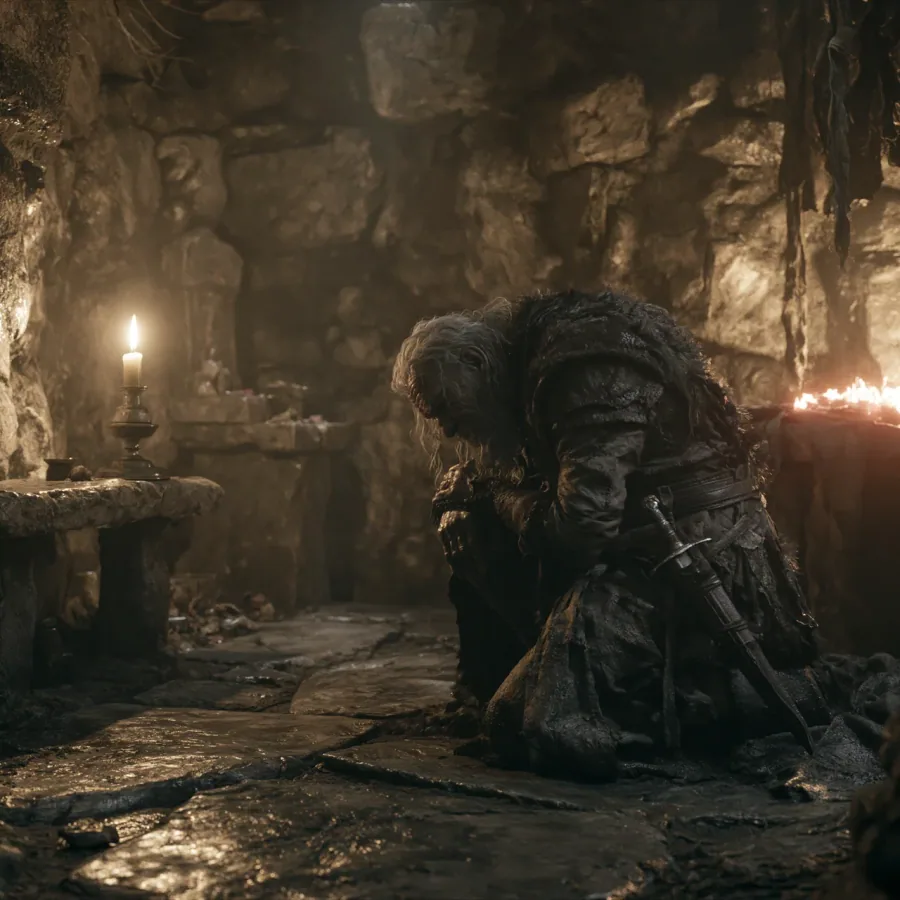
Phaeren trained her once. He told her that she was holding the flame badly — that she was holding it like a moth, the way one holds a thing one does not want to lose, when the flame was a thing that wanted, by its nature, to be open. He told her, honestly, what no other angel had been honest enough to say: that the flame was the rent and she was the building, that the flame would take from her in the carrying, and that the night she was asked to spend it she would know, by the long carrying, that the spending was not a surprise. She thanked him for the honesty. He did not soften.
The Veilbreaker Sigil (S17c2)
On the morning of the wall, she walked up the centre aisle of Darklume's great nave with the flame in her cupped left hand and stood at the altar in front of three hundred witnesses. Silas had set the small flat case of pale wood on the altar's eastern side. She opened it. Inside lay a thin disc of a metal she did not know. She set the disc on her open palm — into the flame. The wall behind the altar lit with names: three lords of Krypton, two Counted Houses of Sereveld, one junior astronomer of Avarath. The flame, in spending, became smaller — by a fifth.
The night of the spending (S19c3)
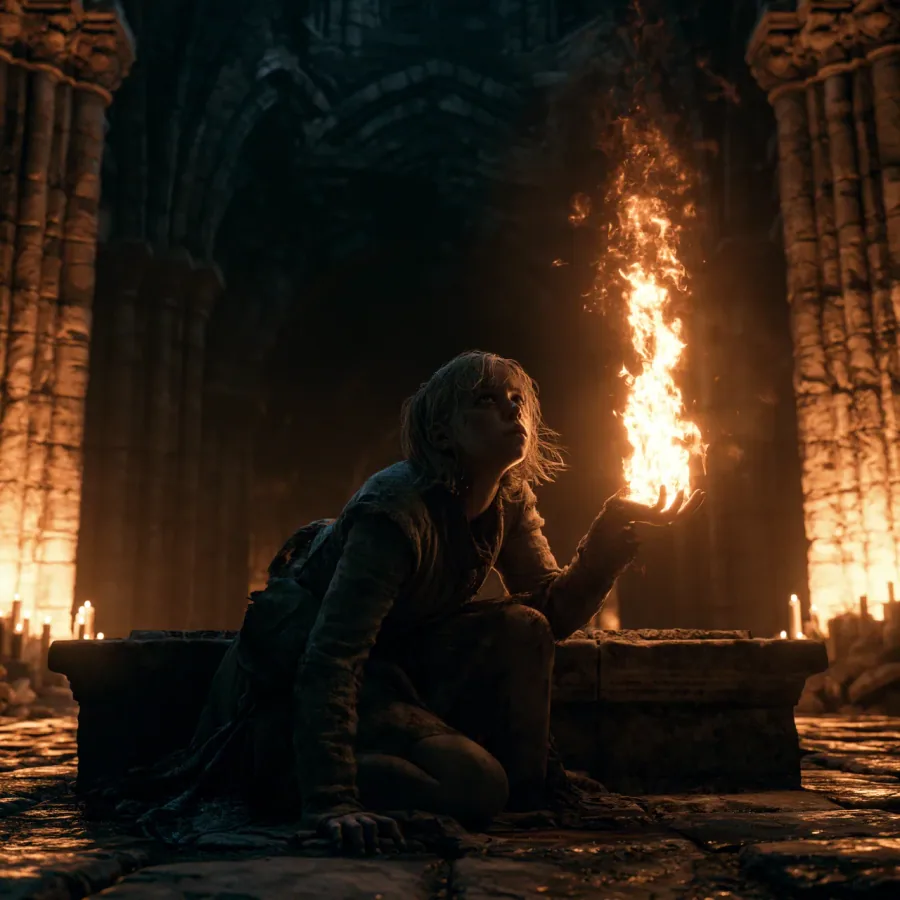
On the night Maelis's column reached the broken gate, the cathedral's bell rang without a hand on the rope at the moment she decided to open her hand. She opened it. The flame rose to the height of her hand and continued rising, past her shoulder, past the high vaulted dark beams of the cathedral. By the time it reached the height of the clerestory windows, the cathedral's great room was full of it. It was warm: the warmth of a hand held against a cold cheek, of an oven not too hot for bread. The warmth reached the third turn of the courtyard and the willing-dead unmade gently. Grendar, who had been at the front, set down his sword, looked into the warm full room, and smiled. He thanked her. He unmade with the thanks on his face.
Phaeren came to the altar. She was on her knees. She said, looking up at him, thank you for being honest. He had no answer; his order had not built him one. She died before he answered. The flame had left a clean ledger. The cathedral held.
The walking and the carrying (S14–S15)
She walked east for eight days, alone, with the flame in her cupped hand. She told no one in the villages she passed. She slept in barns. She reached Darklume on the evening of the eighth day in soft cloth shoes that had not been built for a road. Silas opened the gate. He did not ask her name first; he asked her where she had been carrying it from. A well, she said. He brought her to the small chapel at the eastern wall and gave her bread, and a folded blanket, and the small mercy of not being asked further questions.
The training in the courtyard (S16c2)
Phaeren trained her once. He told her that she was holding the flame badly — that she was holding it like a moth, the way one holds a thing one does not want to lose, when the flame was a thing that wanted, by its nature, to be open. He told her, honestly, what no other angel had been honest enough to say: that the flame was the rent and she was the building, that the flame would take from her in the carrying, and that the night she was asked to spend it she would know, by the long carrying, that the spending was not a surprise. She thanked him for the honesty. He did not soften.
The Veilbreaker Sigil (S17c2)
On the morning of the wall, she walked up the centre aisle of Darklume's great nave with the flame in her cupped left hand and stood at the altar in front of three hundred witnesses. Silas had set the small flat case of pale wood on the altar's eastern side. She opened it. Inside lay a thin disc of a metal she did not know. She set the disc on her open palm — into the flame. The wall behind the altar lit with names: three lords of Krypton, two Counted Houses of Sereveld, one junior astronomer of Avarath. The flame, in spending, became smaller — by a fifth.
The night of the spending (S19c3)
On the night Maelis's column reached the broken gate, the cathedral's bell rang without a hand on the rope at the moment she decided to open her hand. She opened it. The flame rose to the height of her hand and continued rising, past her shoulder, past the high vaulted dark beams of the cathedral. By the time it reached the height of the clerestory windows, the cathedral's great room was full of it. It was warm: the warmth of a hand held against a cold cheek, of an oven not too hot for bread. The warmth reached the third turn of the courtyard and the willing-dead unmade gently. Grendar, who had been at the front, set down his sword, looked into the warm full room, and smiled. He thanked her. He unmade with the thanks on his face.
Phaeren came to the altar. She was on her knees. She said, looking up at him, thank you for being honest. He had no answer; his order had not built him one. She died before he answered. The flame had left a clean ledger. The cathedral held.
The walking and the carrying (S14–S15)
She walked east for eight days, alone, with the flame in her cupped hand. She told no one in the villages she passed. She slept in barns. She reached Darklume on the evening of the eighth day in soft cloth shoes that had not been built for a road. Silas opened the gate. He did not ask her name first; he asked her where she had been carrying it from. A well, she said. He brought her to the small chapel at the eastern wall and gave her bread, and a folded blanket, and the small mercy of not being asked further questions.
The training in the courtyard (S16c2)
Phaeren trained her once. He told her that she was holding the flame badly — that she was holding it like a moth, the way one holds a thing one does not want to lose, when the flame was a thing that wanted, by its nature, to be open. He told her, honestly, what no other angel had been honest enough to say: that the flame was the rent and she was the building, that the flame would take from her in the carrying, and that the night she was asked to spend it she would know, by the long carrying, that the spending was not a surprise. She thanked him for the honesty. He did not soften.
The Veilbreaker Sigil (S17c2)
On the morning of the wall, she walked up the centre aisle of Darklume's great nave with the flame in her cupped left hand and stood at the altar in front of three hundred witnesses. Silas had set the small flat case of pale wood on the altar's eastern side. She opened it. Inside lay a thin disc of a metal she did not know. She set the disc on her open palm — into the flame. The wall behind the altar lit with names: three lords of Krypton, two Counted Houses of Sereveld, one junior astronomer of Avarath. The flame, in spending, became smaller — by a fifth.
The night of the spending (S19c3)
On the night Maelis's column reached the broken gate, the cathedral's bell rang without a hand on the rope at the moment she decided to open her hand. She opened it. The flame rose to the height of her hand and continued rising, past her shoulder, past the high vaulted dark beams of the cathedral. By the time it reached the height of the clerestory windows, the cathedral's great room was full of it. It was warm: the warmth of a hand held against a cold cheek, of an oven not too hot for bread. The warmth reached the third turn of the courtyard and the willing-dead unmade gently. Grendar, who had been at the front, set down his sword, looked into the warm full room, and smiled. He thanked her. He unmade with the thanks on his face.
Phaeren came to the altar. She was on her knees. She said, looking up at him, thank you for being honest. He had no answer; his order had not built him one. She died before he answered. The flame had left a clean ledger. The cathedral held.