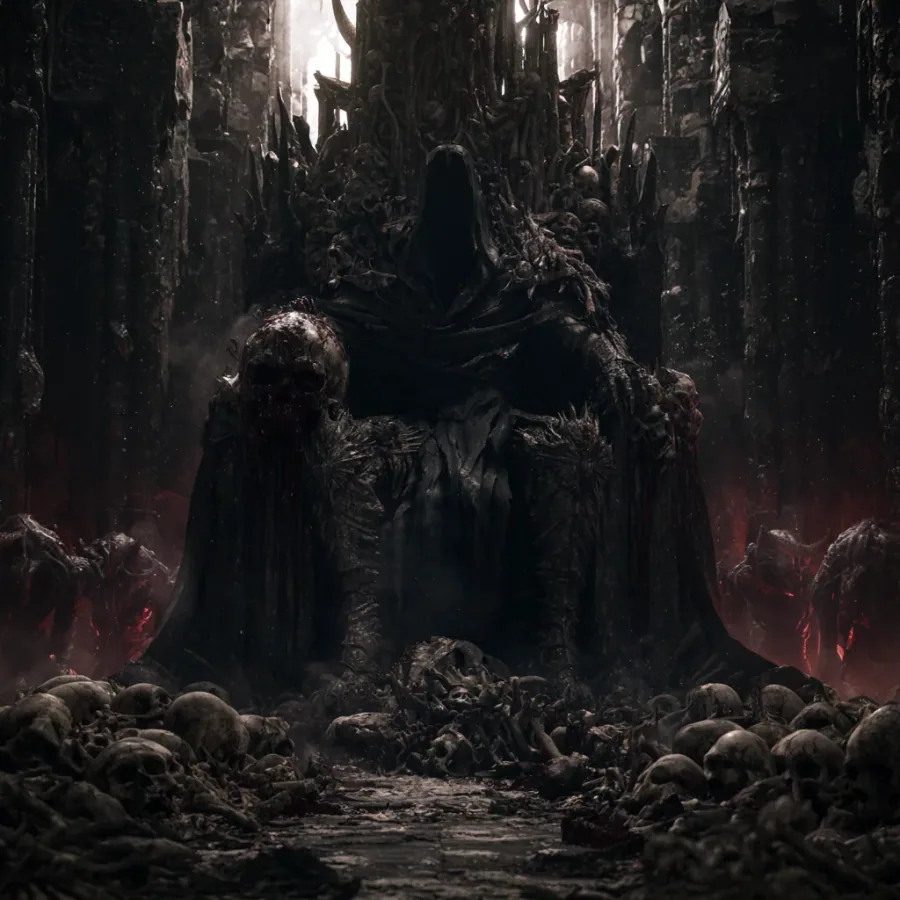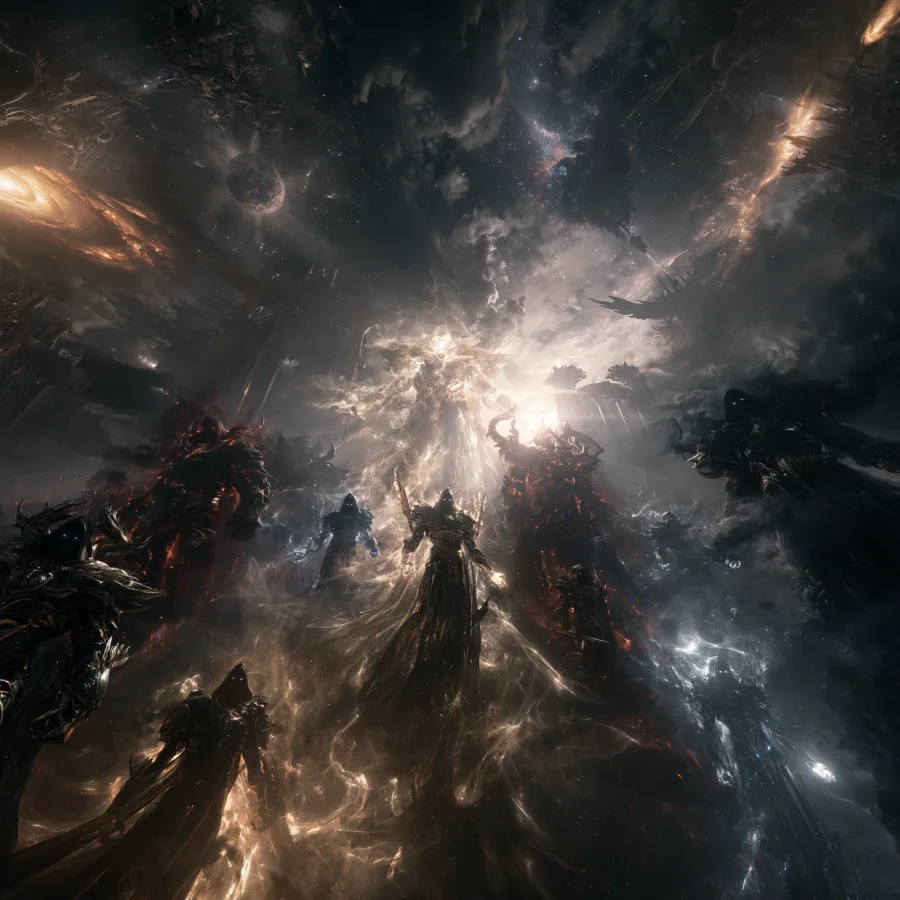
The Thirteen did not arrive. They rose — not from any prior will, not from any throne. They came into being in answer to the Reaper, the way pressure shapes a tide and the way a blade is forged because something needs cutting. Before them there was only the patient certainty that whatever begins must, in time, end. After them there was creation, because someone had finally pushed back.
What they made, they made deliberately. Worlds — vast, layered, impossible places, each given its own laws of weight and weather and faith. Time, slow and uneven, so that mortals might grow within it. Souls, fragile and stubborn things that could choose. Heaven, the highest realm, where the order they had written would have a home. And the laws themselves — judgment, mercy, consequence, restraint — anchors meant to hold creation against the long, quiet pull of the end.
But the most important thing they ever made was balance. Balance is not fairness. It is not symmetry. It is the discipline of opposing forces given just enough room to argue without ending each other. To the Gods, balance was never a virtue. It was a survival instrument — the one and only thing keeping the Reaper asleep.
They do not destroy. That is the rule older than any rule they handed down to mortals. When something cannot be redeemed, they reshape it. When something cannot be reshaped, they contain it. When even containment will not hold, they regulate the harm — slow it, channel it, set it where it can do the least damage to everything else. Aetherion Bastion exists because of this principle. So, in a different way, does the Infernum.
When the corruption of the first souls pooled at the lowest place creation had to offer and refused to leave, balance demanded that one of the thirteen descend with it. Varythos answered. He was not exiled, he was not corrupted, he was not fallen. He embodied the darker arithmetic of a living universe — corruption, demons, collapse, the cost of evil — and he became the God of the Infernum because the well needed a lid. The other twelve did not abandon him. They could not. He is the floor that keeps the rest of creation standing.
They could not personally watch every world, every soul, every century, forever. The act of creation had given them more responsibility than even gods could carry alone. So they made beings beneath them — close enough to act in their stead, far enough below that the law remained the law. They named them Archangels. Each was given a world, a divine blessing tuned to their nature, an order of twelve angels of their own, and authority over the balance of an assigned realm. Twelve were chosen, and the names of three — Kryor of Celesterra, Dremenus of Accora, Grandex of Kolonoth — would in time mark the spine of every story that followed.
Then one of their own, Malzareth, began to want what no god is permitted to want — obedience that had not been earned, dominion that had never been assigned, influence beyond the role creation had given him. The order, by every law it had written, ought to have struck him down itself. It did not. An Archangel did. Kryor, the only one who would move, cut the wound the Thirteen had thought impossible — and the cosmos did not punish the striking. They did not destroy Malzareth. They never destroy. They diminished him, watched him, set him aside, and they did not raise a thirteenth in his place. They have remained twelve. The asymmetry was the price of letting one of them be wrong, and they accept the cost without speaking of it.
They are slow to act. They debate in council. They permit error to run further than mortals can bear, because correcting it too early would unbalance everything beneath them. Their gaze is not absent — it is patient. When they do move, they do not warn, and they do not negotiate. They have made everything that exists, and they are, by their own nature, the last hand that closes on it.
The Reaper has not gone anywhere. The Thirteen — twelve — know this better than anything else they know. Everything they have built, everything they will yet allow, is buying time against a patience older than they are. Balance is the instrument. The Archangels are the long arm. The Infernum is the lid. The Gods themselves are the only reason creation has lasted long enough to be told about.
Created:
- Worlds
- Time
- Life cycle
Maintain balance
Do NOT destroy — only regulate / imprison