Hold-Above-the-Snow was the seat of Avarath, the northernmost kingdom of Celesterra, and stood — by the precise reckoning of the cold tower's instruments — at the upper edge of the world that mortals had ever made livable. Nine months of the year, the Hold was buried in snow. The other three months were, in a phrase the kingdom's older histories used without irony, the months of measurement — the brief season in which the snow receded enough for the lower instruments to be cleaned and the foreign mail to come in.
The geography
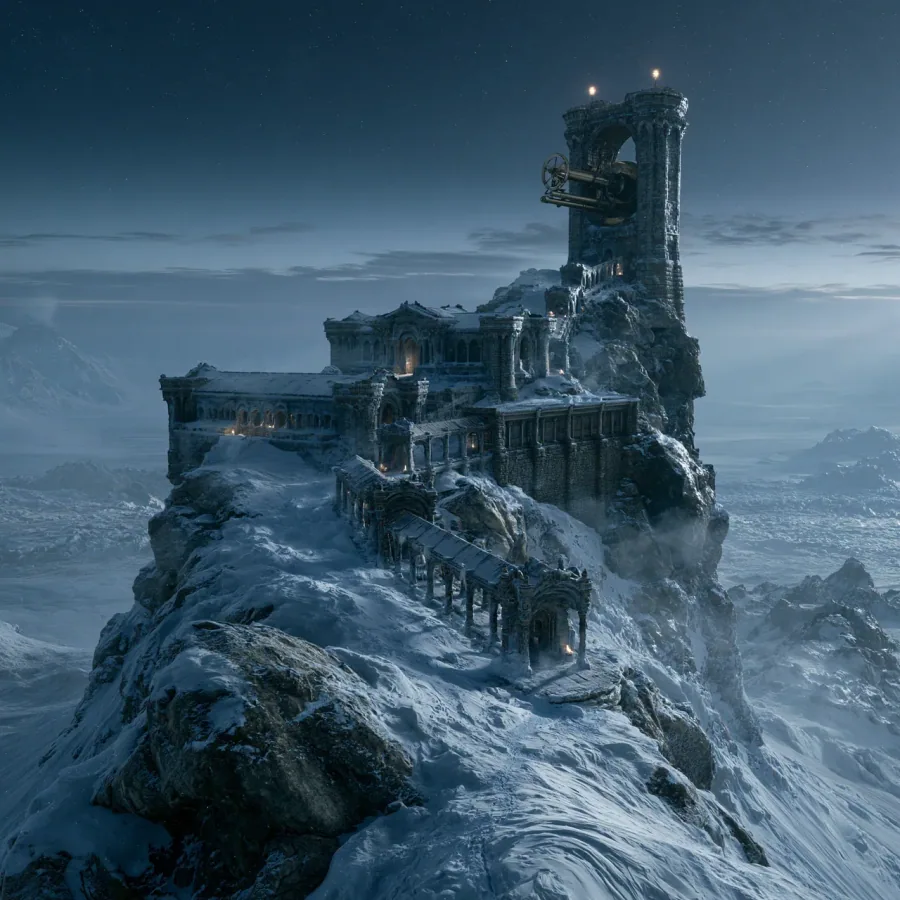
The Hold sat on a high northern ridge above a long pale valley that, in the kingdom's older centuries, had been a glacier. The glacier had receded. The valley had become a plain of stone the colour of bone, in which nothing grew, and on which the snow, when it fell, did not melt for half a year. The Hold itself was four buildings, joined by covered walkways that the wind could close in an hour: the queen's palace, the academy, the cold tower of the Astronomer Royal, and the long stone library that connected them all. There was no city. The few thousand people of Avarath who served the Hold lived in a town three days south, where the snow was only six months deep, and travelled up only when summoned.
The cold tower
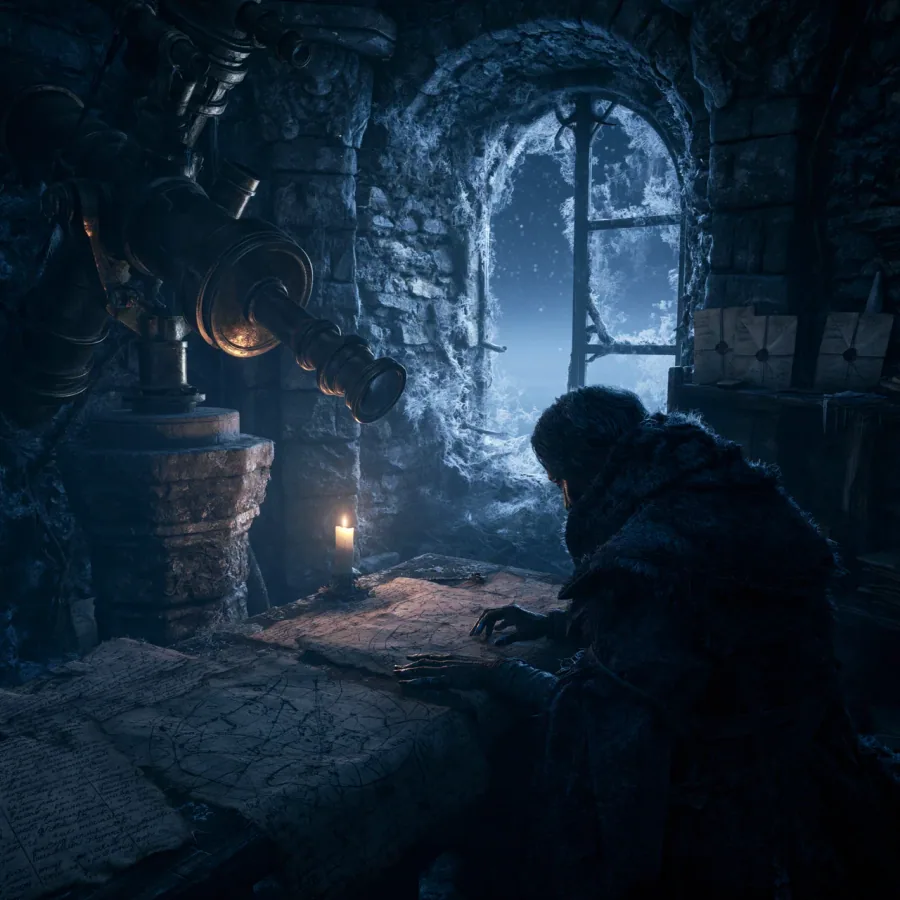
The Astronomer Royal's tower stood at the eastern edge of the Hold, so that its instruments could clear the ridge to the south and the open sky to the east at the same time. The tower had been built by Vesper's predecessor's predecessor, in a generation when Avarath had been worried about a comet that had not, in the end, arrived; the worry had built the tower, and the tower had outlived the worry. By Vesper's tenure, the tower was the kingdom's foreign service. Letters from Krypton and Caedrin and Sereveld came through it. Letters out of Avarath went through it. The Astronomer Royal lived in it, alone, with two assistants who slept in the lower observatory and one cook who came up from the town for the months of measurement and went back for the rest.
Aelinna of Krypton, when she was brought to the tower in S7, found it colder inside than out. She did not, in her record of the visit, complain of the cold. She had been raised to expect that astronomers' towers were cold the way smithies were hot — a feature of the work, not a failure of the building.
The court of the queen-scholar
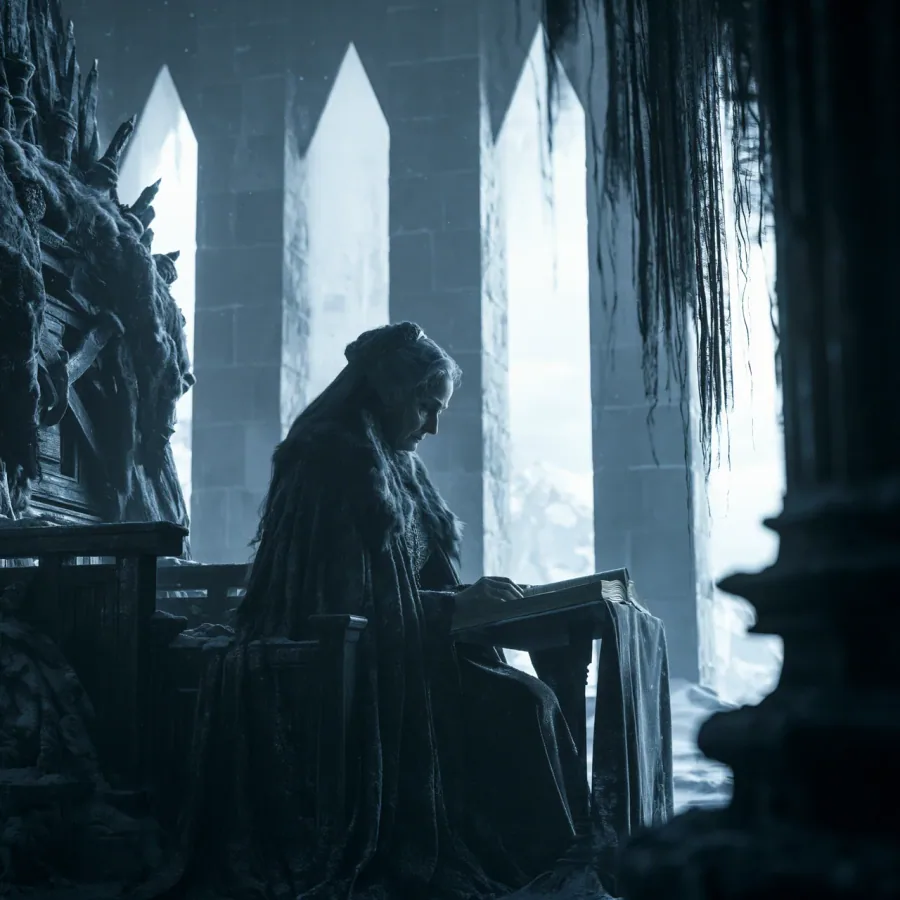
Queen Ysmara held her court in the palace, but she held it sparely. She received perhaps four foreign envoys a year. She received no domestic petitions; the kingdom's smaller administrative work was handled by her chancellor in the southern town. She read, in any given week, more dispatches than she spoke sentences. The court that had named her the Patient had, the chronicler implies, named her with a kind of weary respect — for it was difficult to serve a queen who would not be hurried, and impossible to serve her badly without her noticing.
Stance toward Krypton
Avarath had been Krypton's ally for a hundred years, in a treaty that had been signed by Aelinna's grandfather and Ysmara's predecessor in the same long winter and had not, since, been amended. The alliance was small in arms — Avarath's standing army was perhaps a tenth of Krypton's, and was not the army Krypton would have wanted in any case — but it was, by Ysmara's quiet design, large in information. The Astronomer Royal's letters to the Krypton chancellery had been arriving for thirty years. They had been, for most of those years, ignored.
By the chronicle's beginning, the ignoring had become a measurable cost. By S7, the heir of Krypton was riding north to read what the kingdom's chancellor had not. By S17, Avarath would, for the first time in twenty years, formally declare itself in a matter not commercial. The Hold-Above-the-Snow, on that day, lit two lamps at the cold tower's apex — a signal Avarath had not used in living memory, and which the southern town, on the morning of its lighting, had not at first understood.