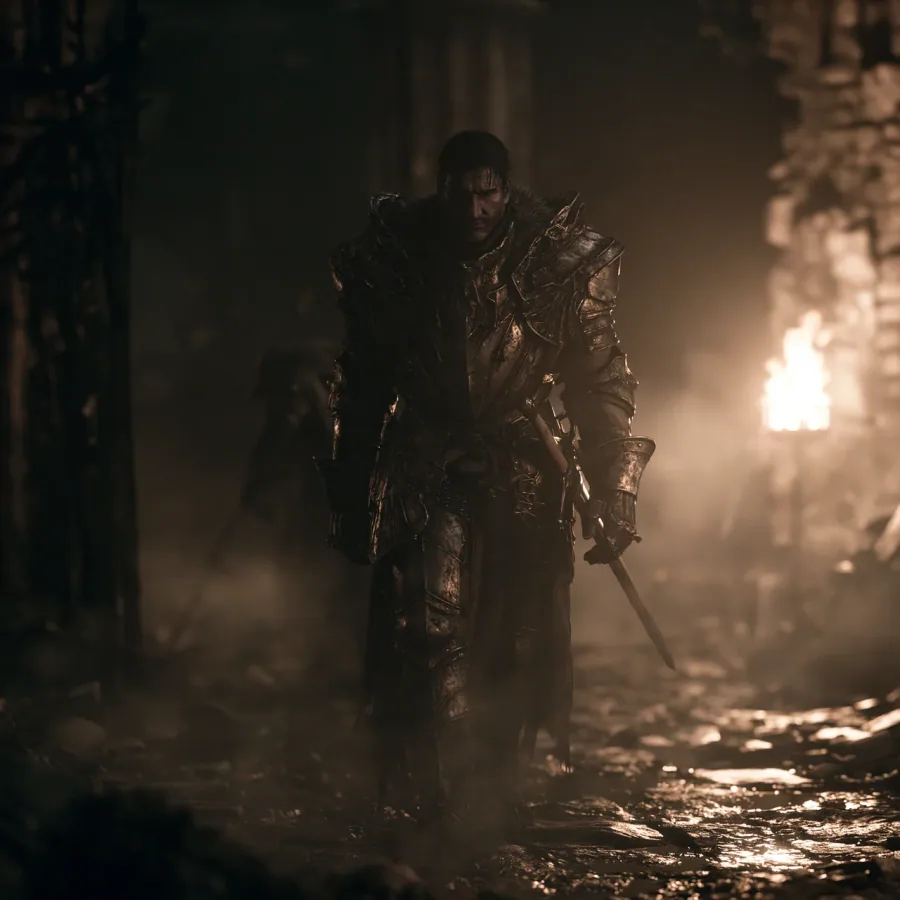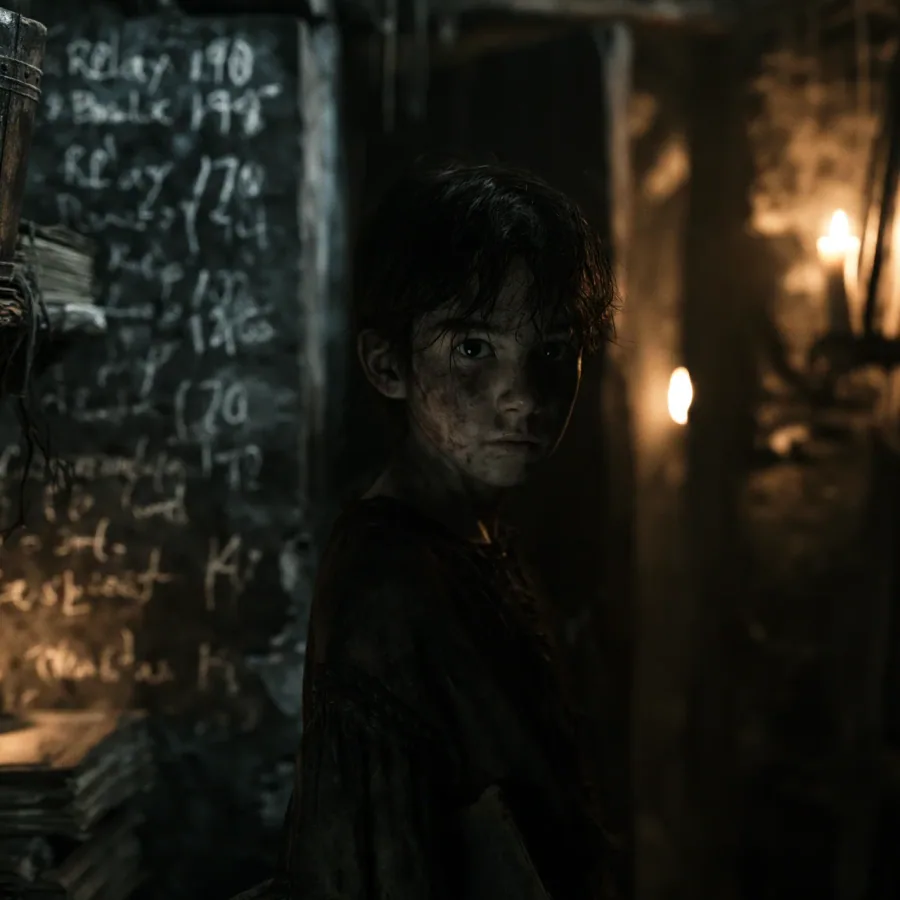
Calix was fifteen when the warlock began to teach him. He had been an orphan of a small village two days inland of Marrowport — a village that, by the chronicle's reckoning, had been quietly cleared by Maelis's network in the year before he was found. He did not know this. He had been told that his parents had died of a winter fever, and the telling had not been a lie in any way he could check, and he had grown up in the household of a careful woman who had eventually delivered him, at twelve, to a master who had paid her in silver for the courtesy.
He was bright. He was not yet handsome — boys of fifteen were rarely handsome, and Calix had the long thin frame of a boy who had not finished growing — but he had the dark steady eyes the warlock had, by some private measure, decided to look for. He learned quickly. He read in two languages by fourteen and in three by sixteen. He memorised the small ritual diagrams Drexel set him without knowing what most of them meant. He was, in the warlock's quiet judgment, the most promising apprentice Drexel had taken since his own training under Azrath Voidborne, four decades earlier.
What he was not told
He was not told, in the years of his apprenticeship, what the work was for. The warlock had taught him by isolating each piece — a binding diagram here, a small essence-trap there, a careful diction by which the dead could be addressed without raising them — and Calix, in the way of clever apprentices, had learned each piece without yet seeing the whole. He had been, the chronicler judges without sentiment, kept deliberately uncurious. The warlock did not ask him to swear oaths he did not understand. The warlock asked him only to do the work, and the work, taken in small enough pieces, had not yet been the work he would later refuse to do.
The book in the rubble
In S11, in the cleared village Maelis had emptied, Calix found a child's book in which a passage about Kryor had been carefully circled. He pocketed the book. He did not show his master. He did not throw it away. The chronicler does not narrate what he thought of the passage. The chronicler records, only, that the apprentice who keeps a thing his master would burn has begun, somewhere, to apprentice himself elsewhere.
From that moment forward, Calix was no longer, in his own private accounting, the warlock's. He continued to do the work. He continued to learn. But he had, the chronicle implies, started to read the work he was being given against a question the work could not answer.
The walking-away
In S18, on a forest road east of Marrowport, on a journey Maelis was making with the apprentice in a single cart, Calix simply walked away. He did not announce it. He did not write a letter. He did not take with him anything Drexel would later be able to recover — the small ritual instruments, the half-finished diagrams in his copybook, the careful keys the warlock had given him to certain doors. He left them all in the cart. He took with him, the chronicler records, a single book, which the chronicler implies was the book from the rubble.
He walked west. The chronicle does not, by S20, record where he reached. It records only that he walked, and that Maelis, finding him gone in the morning, did not pursue immediately — and that Drexel, on receipt of her single line of report, wrote nothing back.
He is, in the chronicle's reading, the warlock's only failure of recruitment. Drexel had been trained by Azrath Voidborne; he had, in his turn, trained one. The trained one had walked away on a forest road at sixteen, and had not, the chronicler is careful to record, signed his refusal. The signing comes later, if at all.