Grendar the Bound had been, before he was Bound, a knight of a small lake-shore order in the south of Caedrin. He had served honourably for nineteen years. He had been captured at thirty-eight on the road back from a routine patrol, in a campaign nobody afterwards recorded as a campaign, and had vanished into Drexel's network for eighteen months. The chronicle does not narrate what was done to him in those months. It records only what was left of him afterwards.
He was a willing-dead — a category Drexel had developed past the empty and past the husk. He was not bound by any compulsion. He was not animated by stolen essence. He was a corpse that had been asked, in plain words, whether it would consent to walk; and he had, in plain words, consented. The consent was the thing that distinguished him. The empty did not consent. The husks could not. Grendar had said yes.
The man before
The chronicle gives his prior life one paragraph and no more. He had been tall. He had been dark-haired. He had had a wife who had died before his capture and a daughter who had survived him by going to a Sereveld merchant family and quietly forgetting the father who had not, by any record, come home. He had been kind to his men. He had been, in the small way of small officers, brave. None of this was salvageable, in the bound state, except as a kind of gravity he carried with him: a body that had been a good man, walking now in the service of the warlock who had bought it.
The work
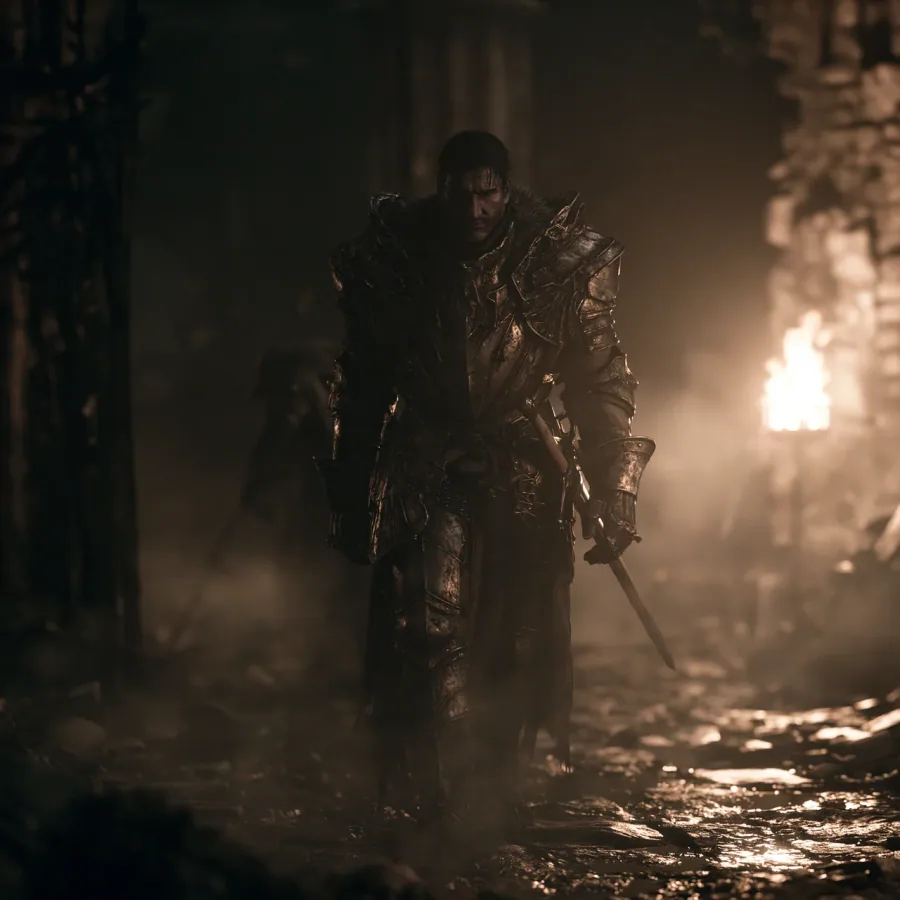
His task was to carry. He carried documents. He carried instruments. He led, in S19, the dead front line at the cathedral gate, because Maelis had needed a willing-dead at the front of a column and Grendar had, in his quiet way, agreed. He did not, the chronicler is at pains to record, fight with malice. He fought with the same competence he had carried as a knight, applied now in the wrong direction. The empty around him fought without sense. He fought, terribly, with sense.
The unmaking
When Auren of Embers spent her flame at Darklume's altar in S19, the cathedral filled with light, and Maelis's column dissolved at the gate, and Grendar — willing-dead, the dead who walked because they had been asked and had said yes — was unmade. The chronicle records the moment with care. He was not destroyed in violence. He was unmade the way a vow is unmade: by being released. And in the moment of unmaking, with the cathedral's air made briefly out of fire, he was grateful. The chronicler does not explain the gratitude. It records only that he had said yes, once, on a working table eighteen months before; and that this had been the first thing offered to him, since, that he had been able to receive without saying yes.
He had been, in Drexel's careful catalogue, a successful experiment. He had been, in the chronicle's reckoning, a man who had been given the wrong choice in the wrong room and had taken, at the very end, the only freedom that remained.
The delivery at the camp (S16c3)
He walked into the Darklume camp by the western lane in the small careful pace of a column-veteran on his last day before furlough, carrying in his left hand a leather case of perhaps a foot in length, square at the corners, oiled at the seams. He did not enter the camp. He stopped at the edge of the lantern's circle. He set the case down at Ryder's order, stepped back four paces, stood by the second wooden pole. He gave one true name — his own — and one true place — Pickelbridge, his grandfather's town, forty-one years ago. He was sent home. He did not turn off the lane.
The front rank (S19c1–c3)
He led the dead front rank up the road to Darklume in S19c1, walking at the pace Maelis had trained the column to. He carried, in his right hand, his old knight's sword — the only weapon in the column that had been his before the column. He survived Kael of the Bowmen's first arrow at the gate. The cathedral's bell rang. The warmth of Auren's flame reached the third turn of the courtyard, where he was at the leading edge.
He did not, in the warmth, fall. He looked down at his hands. He looked at the sword. He set the sword on the ground at his feet. He stood up. He looked into the warm full room of the cathedral past Vaelor's shoulder, where the altar was, where Auren of Embers was kneeling. He smiled. He said, in a voice the watch on the cathedral wall later disagreed about whether they had heard at all: thank you. Then he unmade.
He was the first willing-dead in the chronicle to be given his return. The chronicle records the thanks went, in the unmaking, up. The body was buried by his old town's convention, on the sword's carry, with the small handful of earth Pickelbridge sends back to its dead.
The delivery at the camp (S16c3)
He walked into the Darklume camp by the western lane in the small careful pace of a column-veteran on his last day before furlough, carrying in his left hand a leather case of perhaps a foot in length, square at the corners, oiled at the seams. He did not enter the camp. He stopped at the edge of the lantern's circle. He set the case down at Ryder's order, stepped back four paces, stood by the second wooden pole. He gave one true name — his own — and one true place — Pickelbridge, his grandfather's town, forty-one years ago. He was sent home. He did not turn off the lane.
The front rank (S19c1–c3)
He led the dead front rank up the road to Darklume in S19c1, walking at the pace Maelis had trained the column to. He carried, in his right hand, his old knight's sword — the only weapon in the column that had been his before the column. He survived Kael of the Bowmen's first arrow at the gate. The cathedral's bell rang. The warmth of Auren's flame reached the third turn of the courtyard, where he was at the leading edge.
He did not, in the warmth, fall. He looked down at his hands. He looked at the sword. He set the sword on the ground at his feet. He stood up. He looked into the warm full room of the cathedral past Vaelor's shoulder, where the altar was, where Auren of Embers was kneeling. He smiled. He said, in a voice the watch on the cathedral wall later disagreed about whether they had heard at all: thank you. Then he unmade.
He was the first willing-dead in the chronicle to be given his return. The chronicle records the thanks went, in the unmaking, up. The body was buried by his old town's convention, on the sword's carry, with the small handful of earth Pickelbridge sends back to its dead.
The delivery at the camp (S16c3)
He walked into the Darklume camp by the western lane in the small careful pace of a column-veteran on his last day before furlough, carrying in his left hand a leather case of perhaps a foot in length, square at the corners, oiled at the seams. He did not enter the camp. He stopped at the edge of the lantern's circle. He set the case down at Ryder's order, stepped back four paces, stood by the second wooden pole. He gave one true name — his own — and one true place — Pickelbridge, his grandfather's town, forty-one years ago. He was sent home. He did not turn off the lane.
The front rank (S19c1–c3)
He led the dead front rank up the road to Darklume in S19c1, walking at the pace Maelis had trained the column to. He carried, in his right hand, his old knight's sword — the only weapon in the column that had been his before the column. He survived Kael of the Bowmen's first arrow at the gate. The cathedral's bell rang. The warmth of Auren's flame reached the third turn of the courtyard, where he was at the leading edge.
He did not, in the warmth, fall. He looked down at his hands. He looked at the sword. He set the sword on the ground at his feet. He stood up. He looked into the warm full room of the cathedral past Vaelor's shoulder, where the altar was, where Auren of Embers was kneeling. He smiled. He said, in a voice the watch on the cathedral wall later disagreed about whether they had heard at all: thank you. Then he unmade.
He was the first willing-dead in the chronicle to be given his return. The chronicle records the thanks went, in the unmaking, up. The body was buried by his old town's convention, on the sword's carry, with the small handful of earth Pickelbridge sends back to its dead.