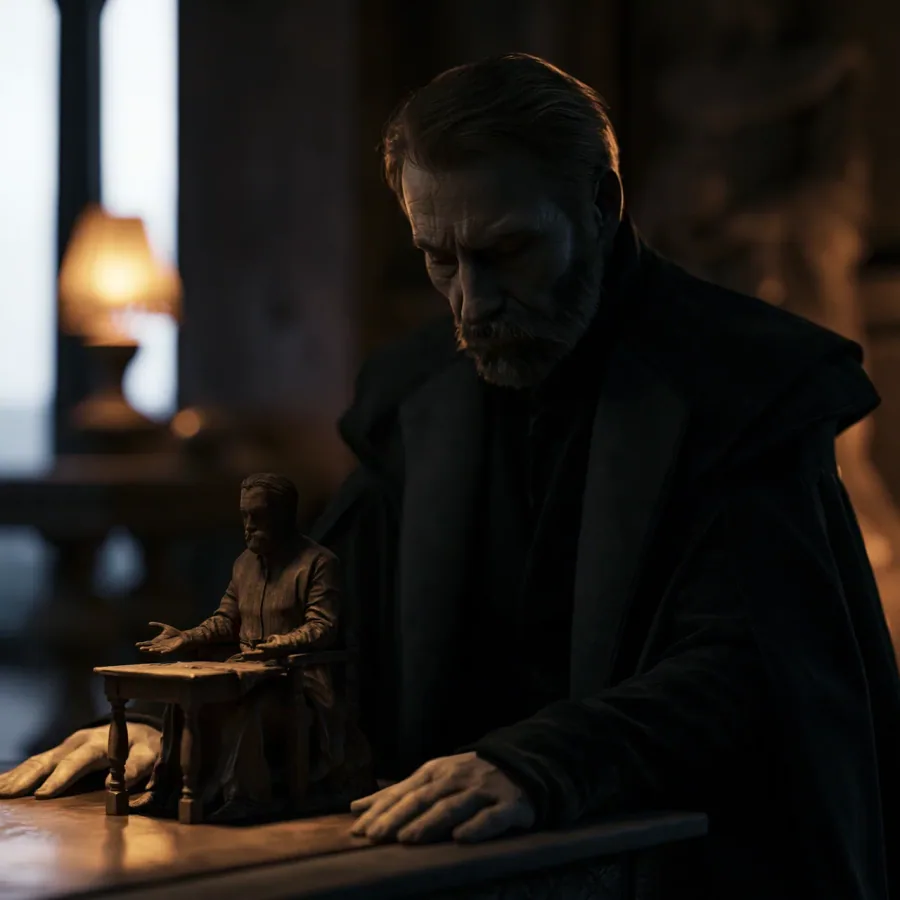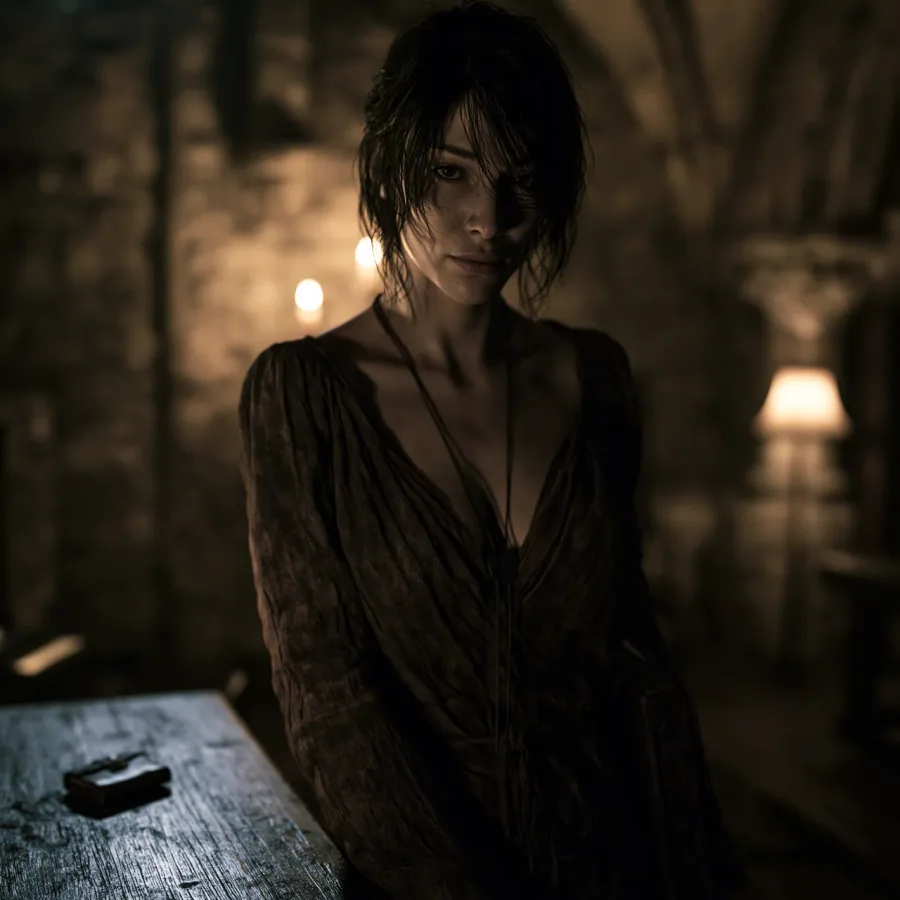
Kira Morrow was Caedrin's spymaster, hand-picked by Prince-Regent Tovalen out of a generation that had given up the chapel and replaced it with the ledger. She was thirty-six. She was small, dark-haired in the practical short style of working agents, dressed in clothes that were always one quality below her station and always one quality above the room she was working. Her face, the chronicler concedes, was unremarkable. This was a thing she had cultivated.
She had no faith. She had not been raised with one and had not acquired one in adulthood; she had read the Schism doctrines, when Tovalen had quietly required it of her, the way she read every piece of writing put in front of her — for what it told her about its writer, not for what it told her about the world. The doctrines, she had concluded, told her that the Schism had been written by frightened intelligent people. She was respectful of frightened intelligent people. She was not converted by them.
The patterns Tovalen did not see
What Tovalen had hired her for, whether he admitted it to himself or not, was her capacity to see patterns in places the court had agreed not to look. She read the trade roads from Sereveld the way a doctor read a pulse. She had, in her first three years in the post, identified two of Drexel's compromised Counted Houses by the simple discipline of reading the harbour ledgers of three separate ports against each other and finding, in the residuals, an arithmetic that did not balance. She had not yet identified the warlock as a warlock. She had identified him as a hand — a single intelligence behind otherwise unconnected commercial misalignments — and she had, in private notes she did not share with the prince, begun calling him the figure.
Major Raven, on Krypton's side, had begun calling Drexel by the same word in the same season. The two of them had not yet met. They had been, the chronicler observes, reading the same shape from opposite sides of a continent.
Interior
She was not without warmth. She was without certainty. She had been, in her twenties, briefly married to a court advocate who had loved her and whom she had, by her own account, not understood how to love back; the marriage had ended civilly and the advocate had remarried, and she had become, after, the kind of person who arranged her own evenings carefully because she had no one else to arrange them with. She read, when she was not working, anything she could find that had been written in haste — court depositions, military dispatches, hand-passed letters — because the haste, she said, kept the writers honest.
Stance toward the chronicle
When Aelinna's letter arrived in Caedrin in S8, Kira read it before her prince did. She did not tell him she had read it. She returned it to its seal — a copyist's seal she had perfected as a girl — and set it on his desk. She had taken, from the reading, the only thing she needed: that the heir of Krypton had begun to count.
She is, across the chronicle, the only mortal on Celesterra who reaches the kingdoms' shape ahead of every other agent. She crosses the saltflats in S12 because Tovalen sends her; she comes out of Vornholt with Witch-Mother Hesseren's two-year-old certainty in her hands and gives it back to her prince without comment. She meets, on a lake-shore at dawn, an angel of Dremenus and does not know what he is, only that she has been read in the same way she has spent her career reading. She does not flinch. She does not pray. She goes back to her desk and rewrites her ledger to admit, for the first time in her life, that the patterns she was tracking might not all have mortal authors.
The Caedrin court, by the chronicle's seventeenth season, would be aligned formally with Krypton. The alignment, Tovalen privately admitted, had been read by his spymaster a full year before he had been ready to sign it.