I have been a general of the Infernum for what mortals would call a long
time. I have stood at the lip of the Pale Foundry on the morning the first
of the husk-tides was poured. I have walked the eighth corridor on the
night a sealed door behind us breathed once and did not breathe again. I
have, in the centuries since I was made what I am, learned the
distinction between things one is permitted to watch and things one is
permitted to remember. They are not the same list. The list of permitted
memories is the shorter one, and Varythos, who keeps both, has never been
careless about which list he writes a thing into.
The blessing was not on either list when it was given. I am writing it
into the second list now because the chronicler asked, and because the
chronicler is one of the few outside the Infernum who is permitted to
ask. I will not pretend I do not know I am being read. The pretense is a
mortal habit and I have never had use for it.
I was the one who held the door. That is the part I am permitted to
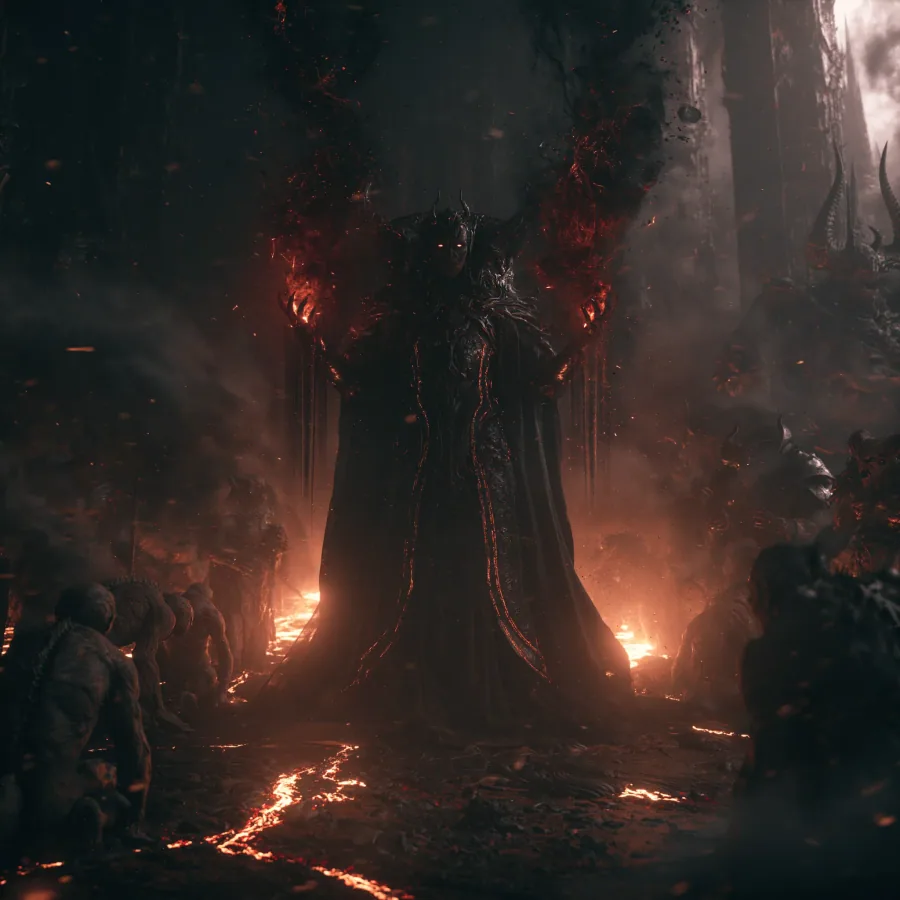
tell you about. The chamber Varythos chose for the giving was not the
throne hall. It was not the long gallery. It was not the foundry, which
is where most of the order's makings happen. It was the small lower
chamber whose walls are not made of any one thing, the chamber that the
older generals call the room without a witness. The room has a witness
when Varythos puts one in it. He put me in it. He did not give me an
instruction. He did not need to. I was to stand at the door, and not look,
and not look, and not look, and the not-looking was, by the
arithmetic of the chamber, the same as looking very carefully indeed.
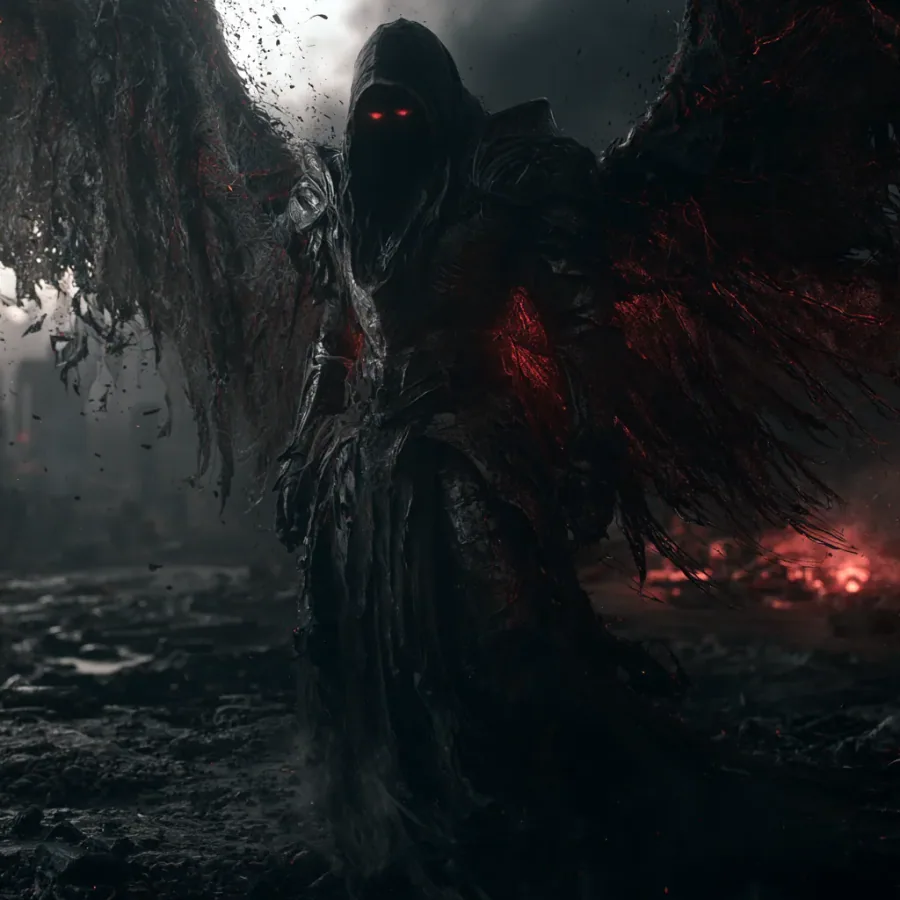
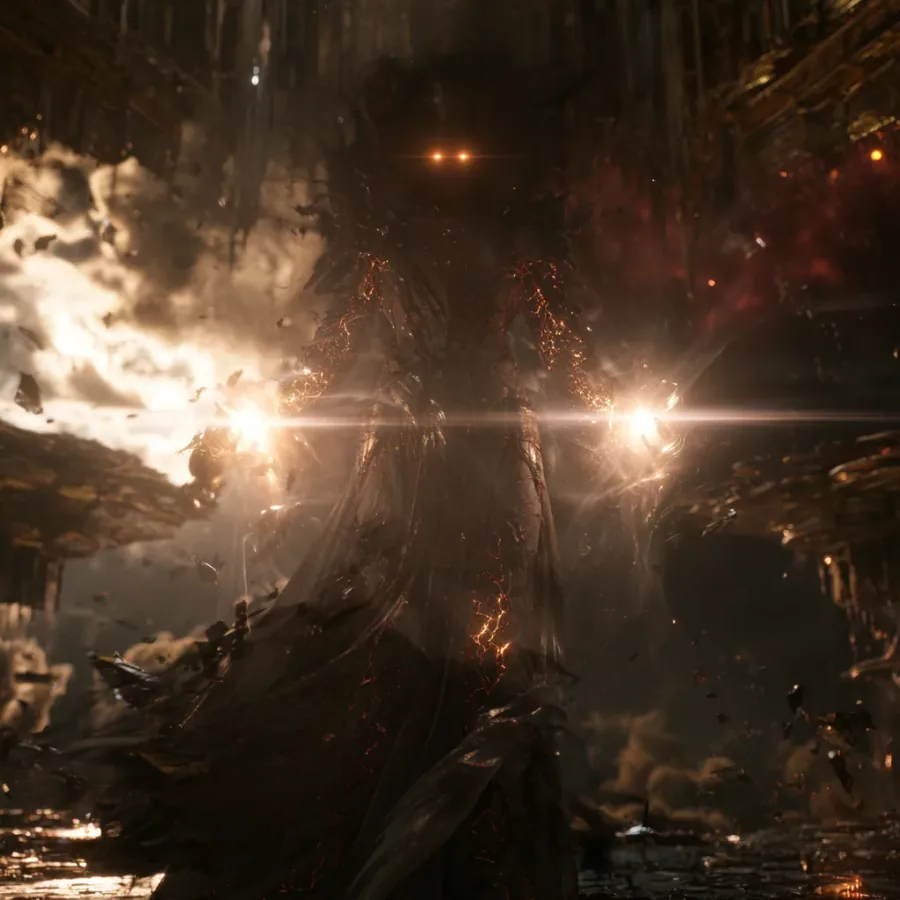
Krozar arrived alone. He always arrives alone. The chronicle, when it
shows him among the orders of Hell, shows him surrounded by what an
Archangel of his order ought to be surrounded by; the chronicle, in this,
is generous. He does not, in fact, walk with company. He walks the way
an empty hall walks. The other generals, when he passes, do not stop
what they are doing, because to stop would be to acknowledge, and an
acknowledgement is a small bow, and he does not, here, accept bows. The
presence crossed past me at the door without attending me. He had
registered me, of course. He was not the kind of being who failed to
register. He had only declined to attend the registration as part of
the visit.
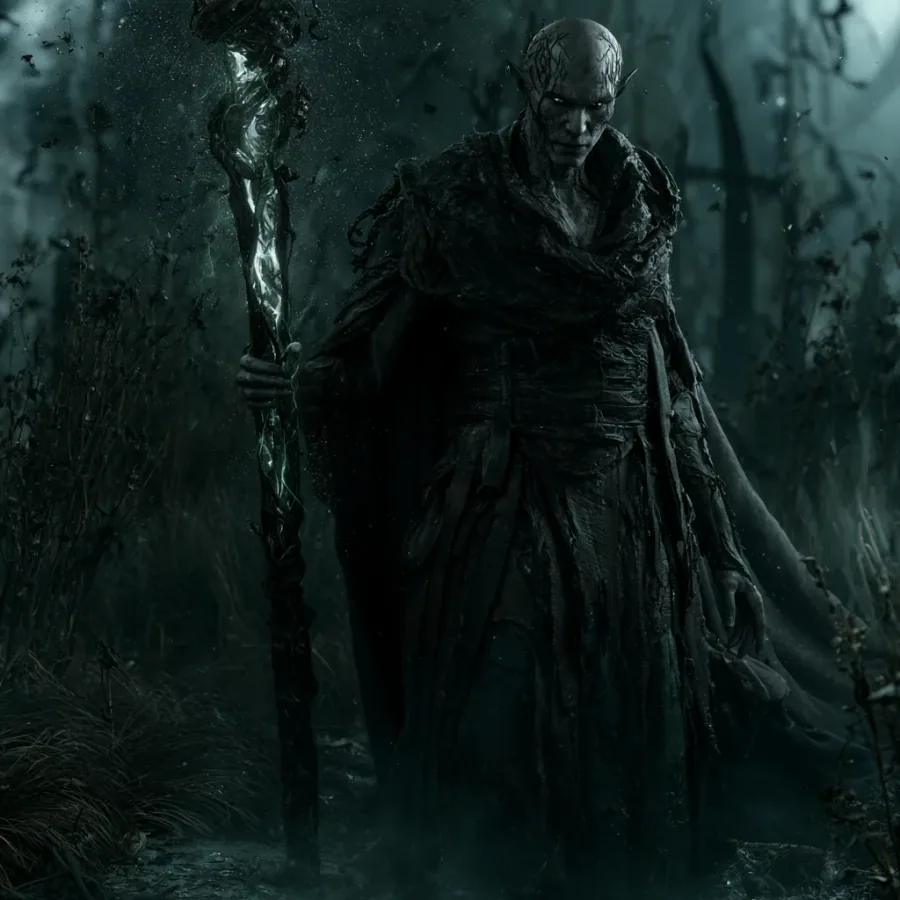
Varythos was already in the chamber. He was set. He had not, that I
saw, lit a lamp. The light in the chamber, when there is light, is not
the lamp's. The light is the chamber's, and the chamber decides, on
its own count, when to give it. It gave a little, that hour. Just
enough that I could register, from the door, the small careful neutral
arrangement of his attention on the seat, and the way the attention
was not gripping. Attention that grips is attention that fears.
Varythos has never feared an interview in this chamber. He has, on
occasion, taken the interview slower than the visitor wanted. That is
the kind of thing he does instead of fearing.
Krozar did not kneel. The chronicler should record that. The order in
Heaven would have insisted on a kneeling. The order in Hell, by
Varythos's old preference, does not. The presence held at a measured
distance from the seat, the distance a soldier holds from a senior at
the giving of an order, and waited. There was nothing carried. There
never is.
Varythos spoke first. He spoke quietly. That was the part that, as I
write it, I notice: nobody in the chamber raised their voice. Nobody in
the chamber needed to. The chronicler will, in time, want me to record a
shout. There was no shout. The blessing of an Archangel of Destruction
is, by its own grammar, the kind of thing that is given softly, because
softness is the thing it has earned the right to.
What Varythos said, I will give to you in three pieces. I am not
permitted to write the joining sentences. The joining sentences belong to
the chamber, and the chamber, even now, has not given me leave.
You came here on your own road. No god turned
your face toward this room. The order above you stripped you of the
blessing it had given. It did not, you understand, strip you of the
capacity. The capacity is older than the blessing. It is
older than the order. It is older than me.
The presence did not acknowledge. It did not adjust at all. He had been
receiving sentences like that since the morning of the terrace, and he
had, by then, learned the trick of receiving them without giving the
speaker the small reward of a reaction. I had seen mortals, in this
chamber, give that small reward without meaning to. He gave none.
I am not making you. I am only naming the
thing you have become. The naming is a courtesy. You may, if you
wish, refuse it. The thing will continue without the name. The thing
will continue with the name. The difference is the courtesy.
This — this is the place where the chronicler has, in older accounts,
inserted Krozar's acceptance. There was no acceptance. There was, in
fact, no answer. He let the offer stand in the air between them for what
the chamber counted as a long time, and then he asked his question.
I will give it to you the way I heard it. I do not have, even now, the
authority to give it to you in any other voice.
On the morning of the terrace. Were you
in the room?
I will tell you what I felt at the door, when the question was given,
because feeling is the only instrument I have for the part Varythos did
not answer with words. The chamber went very still. The light it had
given went a little smaller. The air in the chamber, which had been a
chamber's air, became, for one instant, the air of a much larger room —
the kind of room a god keeps inside himself for the questions he has
agreed, with himself, never to answer.
Varythos's attention came round to him.
It held him for a long time.
I have been a general of the Infernum for what mortals would call a
long time, and I have, in that time, learned to read what Varythos's
silences mean. There are short silences, which are calculations. There
are middle silences, which are the choosing of words. There are long
silences, which are the choosing of not-words. The silence he
gave Krozar was none of these. It was the fourth kind, which I had only
once before, in a corridor whose name I am not permitted to write down,
heard him give to a creature he respected. The fourth kind of silence
is the silence in which a god declines to be a god, in the small space
of a single answer, because the answer is owed to a person and not to a
god. He gave Krozar that silence. He did not, in giving it, lower
himself. He did not, in giving it, raise Krozar. He only declined, on
that one question, to play the role he had walked into the chamber to
play.
And then, very softly, he said the only thing he was willing to say to
the question.
Some questions, my friend, the floor of the
universe is not strong enough to hold the answer to. I will not be
the one who breaks the floor.
Krozar did not press him. He did not, in fact, ever press anyone. He
had, in the centuries since the morning of the terrace, learned to ask
his questions once, and to read whatever the chamber gave back to him,
and to decide, in himself, whether the silence had been generous or
careful. The silence Varythos had given him was generous. He took the
generosity the way a man takes a coat that does not fit and that he will
nevertheless wear.
The blessing, when it was given, was given without ceremony. There was
no fire. There was no thunder. There was no signature on the wall. There
was only the small careful gathering of Varythos's attention, raised
once, at the register a teacher raises attention to a student who has,
at last, finished the long arithmetic of his proof. The gathering held
at that register for the time the chamber required. Then it settled.
Then the chamber lowered its small light by another increment, and the
chamber, in lowering its light, gave the only signature the giving had
needed. Krozar did not bow. He did not thank. The presence came round,
crossed back to the door, and passed me at the door the same way it
had passed me coming in.
This is the part I am permitted to record. The presence attended
me, the second time. It had not the first. The attending was not
threat. It was not gratitude. It was not warning. It was the attending
of a being who had, for the duration of the chamber, been spoken to as
a person, and who was now resuming the long quiet of being only a
function. The attending let me register, for one instant, the person
under the function, and then the person was closed away, and the
closing was a courtesy of its own. The chamber had decided that I
should know what had been in the chamber, and the chamber had decided
that I would not be the one to write it down without permission.
I am writing it down now because, by the chronicler's accounting, that
permission has at last been given. I will not say how. The chamber, even
now, has its rules about that.
I have stood many watches since. The Infernum has had wars. It has
had the smaller wars that are not called wars and that nevertheless
empty corridors of their occupants for a hundred years at a time. I have
served Varythos, and Varythos has, in his way, served the architecture
of the cosmos that placed him at the floor of it; the architecture, in
its way, has not always been kind in return. I have not, in any of those
watches, seen Krozar bow. I have not seen him kneel. I have, on three
occasions, seen him stop in a corridor and look upward, in the direction
the corridor's ceiling does not properly correspond to. I do not know
what he is looking at. The chamber has not given me leave to know.
What I will tell you is the thing I have not yet been able to write
down anywhere else. On the night of the giving, after Krozar had passed
me at the door and the chamber had returned to its ordinary light,
Varythos sat in the seat for a long time and did not stand. He had given
the blessing. He had, by his own rules, finished the work of the
chamber. He could have stood. He did not. He sat the way a man sits
after a piece of news has been received, not delivered. He sat that way
for what the chamber counted as the better part of an hour. And in the
last minute of the hour, before he stood and left the chamber and
released me from the door, he did the thing I have, since, never seen
him do in any other room.
The chamber's small light closed inward upon him.
It closed the way one closes a book one is not yet ready to finish,
but knows one will finish.
I have served him long enough to know what the closing-inward of his
attention, in that chamber, on that night, was for. He was not resting. Varythos
does not rest. He was holding, for one minute, the question he had
declined to answer — holding it the way a parent holds a thing the
child has not yet asked for, and will. He was, in his long quiet, the
god who had been asked, by the only being in creation who had earned
the asking, whether he had moved a friend toward a terrace. The
question, in his closed eyes, was not closed. The question was the only
thing in the chamber the chamber had no jurisdiction over.
I tell you this so that, when the chronicler writes of the second
blessing, the chronicler does not write it as the triumph the order in
Heaven, in its later doctrines, will say it was. It was not a triumph.
It was a quiet exchange between two beings who had loved the same world
in different orders of magnitude, and who had, between them, in the
giving of one blessing, agreed to leave one floor of the universe
unbroken for as long as the universe permitted them to.
The cosmos, on the night that floor was left unbroken, did not know
how close it had been to being broken. The cosmos rarely does. The
cosmos, on every reading I have ever taken of it, sleeps soundly on the
nights its keepers have been most careful, and stirs, badly, on the
nights its keepers thought they were being kind.