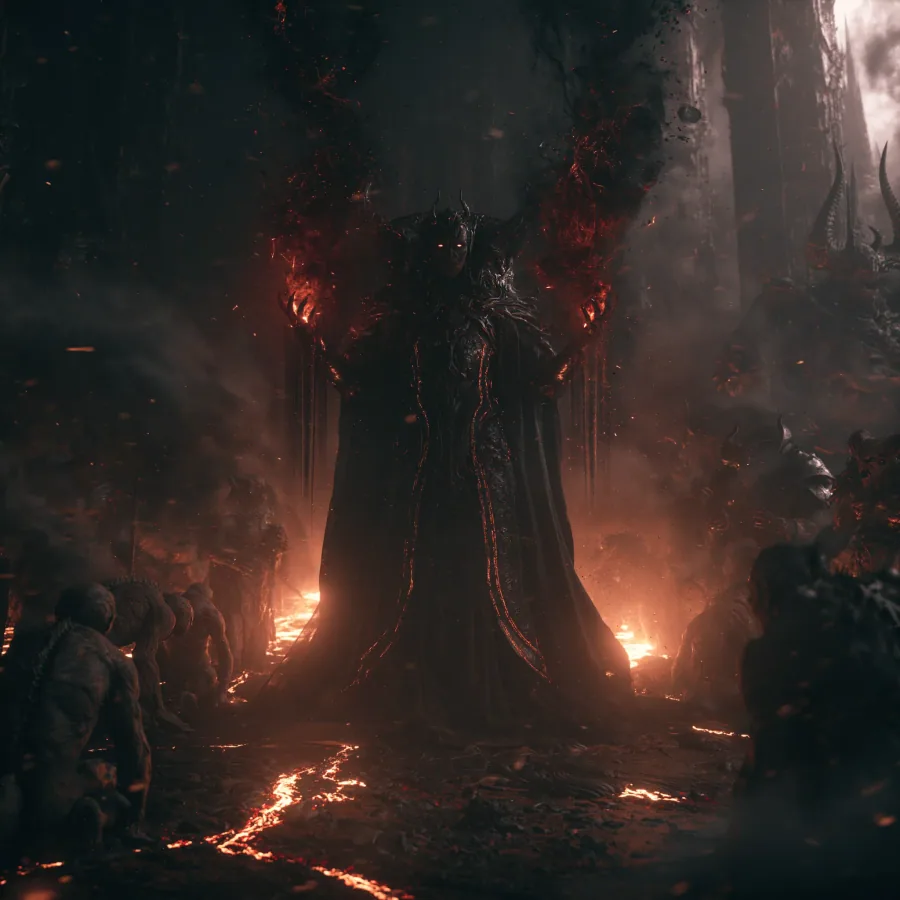
The fortress had a name once. Phaeren the Burned could no longer remember
it cleanly — only the small mineral cool of the outer wall on the night he
had first come to it, and the way the same place, three days later, had
no wall left to register at all. There was only ash, and the ash was
warm, and the warmth was not natural.
This is the account that Phaeren has given of that descent. He has given
it once, to a scribe whom he trusts, and never since. The scribe has
written it down because Phaeren, after, would not.
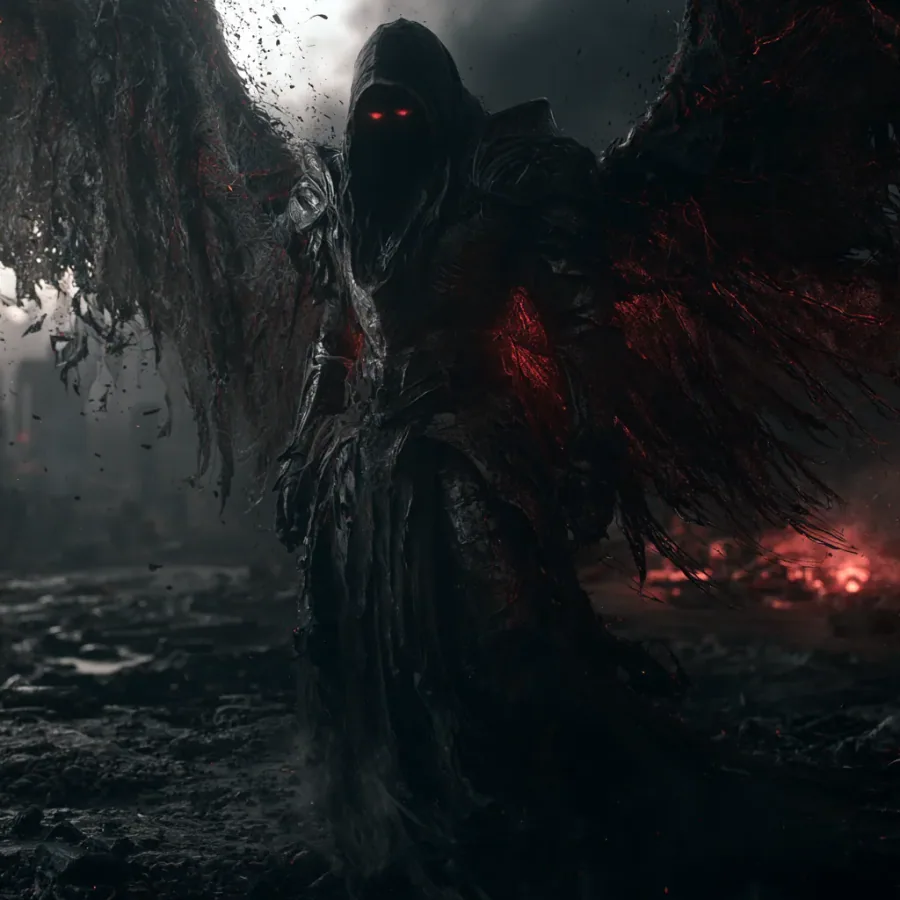
The Archangel came at dusk.
He did not come from the air. That detail, of every detail, Phaeren has
kept the most carefully — because the order's twelve, in their training,
were taught that an Archangel descending in fury comes from above, like
weather, and that the descent itself is part of the warning the world is
permitted before the blade lands. Grandex did not give the warning. He
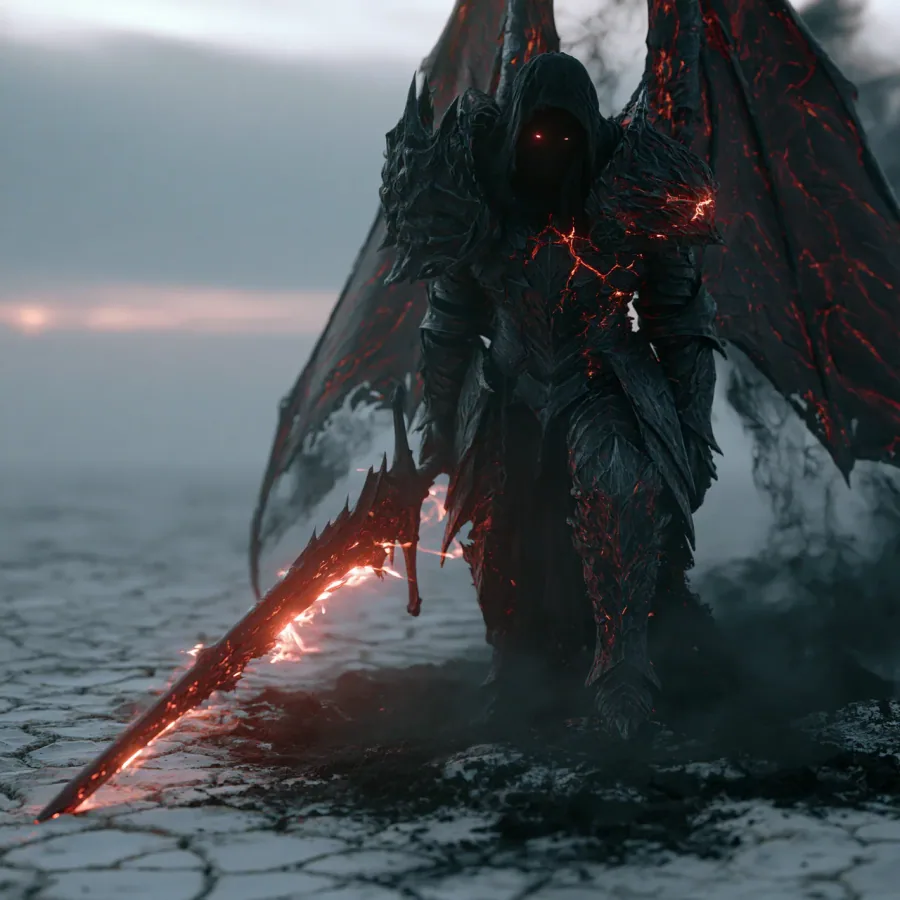
walked. The figure of him crossed the plain west of the fortress at the
slow patient pace of his attendance, and the grass under each step burned
to nothing in a perfect circle and grew back, blackened and exhausted,
before the next step landed. The greatsword Kolonoth was about him,
sheathed in nothing — the world was the sheath, and the world bent
slightly aside as he walked.
Phaeren saw the approach from the second of three angels still posted
on the ridge.
The other two — Suren and Iliach, both of them younger, both of them
carrying their first names in the order — saw at the same moment. Phaeren
remembers them. He remembers Suren steady in the last light, calm in the
way the order taught calm, already counting the warlock's wards on the
fortress and beginning the work of pulling them down. He remembers Iliach
laughing once, briefly, the way Iliach always laughed before a fight he
expected to win.
Phaeren does not remember saying anything to either of them.
He has, in private, regretted that for every one of the long years
since.
The descent was not, in any honest reading, a battle. It was an
arithmetic.
The fortress had three rings of dead. Drexel had built them patiently —
mortals first, raised once and broken in correctly, then the second
ring, which was harder; then the third, which was a kind of dead Phaeren
had not seen before. The third ring did not move quickly. It did not
need to. It was made of the kind of corpse that, by being present,
made the air around it forget how to carry sound. Suren had begun, on
the ridge, to sketch its geometry in the small ledger he carried for
exactly such purposes.
The third ring did not register on his attendance.
The first ring stopped existing as he came across it. There was no
strike. The greatsword was not drawn. He was simply present, and
presence was sufficient. The dead in front of him fell in the order they
had been raised. The flame that took them did not climb. It descended,
the way water descends — into the ground, into the bones, into the small
private dark each of them had been carrying. What rose afterwards was a
heat that had no smoke. Phaeren remembers that absence more clearly than
the heat itself. A fire that does not smoke is a fire that has been told,
by something older than fire, what it is for.
The second ring took him eleven steps. The third ring took him three.
By the time the gate registered him, the only thing left moving on the
plain west of the fortress was the small bright moving point of his
walking.
Suren went in first.
He went in because that was the order's protocol when the Archangel had
chosen the centre — the twelve cleared the perimeter, secured the
prisoners, gathered any relics that could be salvaged for the higher
counting. Suren had done this work in four worlds. He was good at it. He
had a small private ritual he performed before crossing any threshold
that had been held by a warlock, and he performed it now — Phaeren saw
him perform it, on the ridge, his lips moving over a single sentence in
the older tongue.
The sentence was for protection.
It did not protect him.
Iliach went in second, because Iliach always went in second when Suren
went first. They had argued about the order of it once, decades ago, and
had settled the argument with a coin neither of them remembered who had
brought.
Phaeren went in third.
He has thought, since, about the gap between second and third — about
how very little time it took for the gap to become permanent. The gap
was the length of one breath. Iliach had crossed the threshold, and
Phaeren had taken his own first step toward the threshold, and in the
breath between those two motions the warlock had done what the warlock
had spent his life learning to do.
The gate did not slam. There was no theatre in it. The ward that
Drexel had laid into the inner doorway simply closed, the way a
ledger closes when the entry on the open page is finished. Suren and
Iliach were on one side of it. Phaeren was on the other. The Archangel,
ten paces deeper into the courtyard, was already turning.
What happened to Suren and Iliach inside the inner hall, Phaeren did
not see directly. He has, in his private accounts, refused to speculate.
He saw only that the wards lit in a colour the order has no proper word
for, and that the light from that colour did not reach his eyes through
his eyes — it reached them through the back of his head, the way a
sound reaches a man who has already decided not to listen. He felt
something in himself thin. He understood, before he understood,
that he had just become one of the survivors of a count that would not
balance.
He did not turn back to the gate. The order did not turn back. The
order pressed the centre.
The Archangel reached the inner hall before he did.
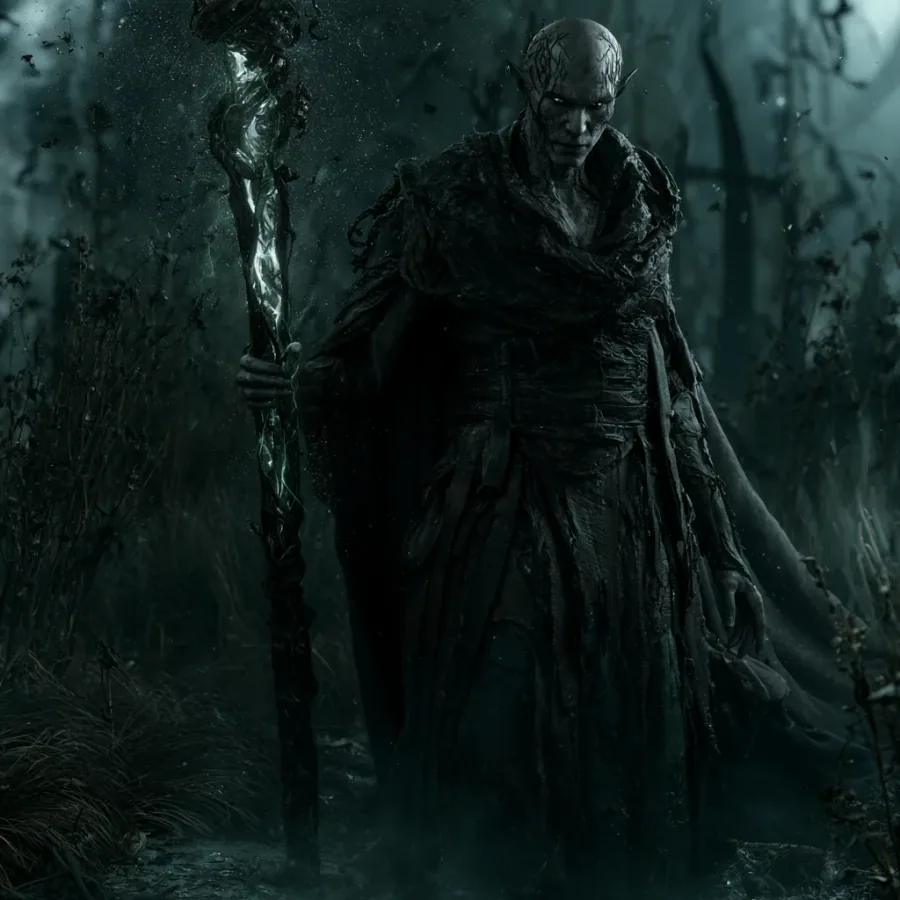
Drexel was not in the inner hall.
That was the moment, Phaeren has said since, that the descent stopped
being a descent and became something else — something the order's
language does not yet have a clean word for. The hall was empty of the
warlock and full of the warlock's work: the staff laid neatly
across the working table, the ledger open at a new page, the small black
stones arranged in the pattern the order had only just begun to
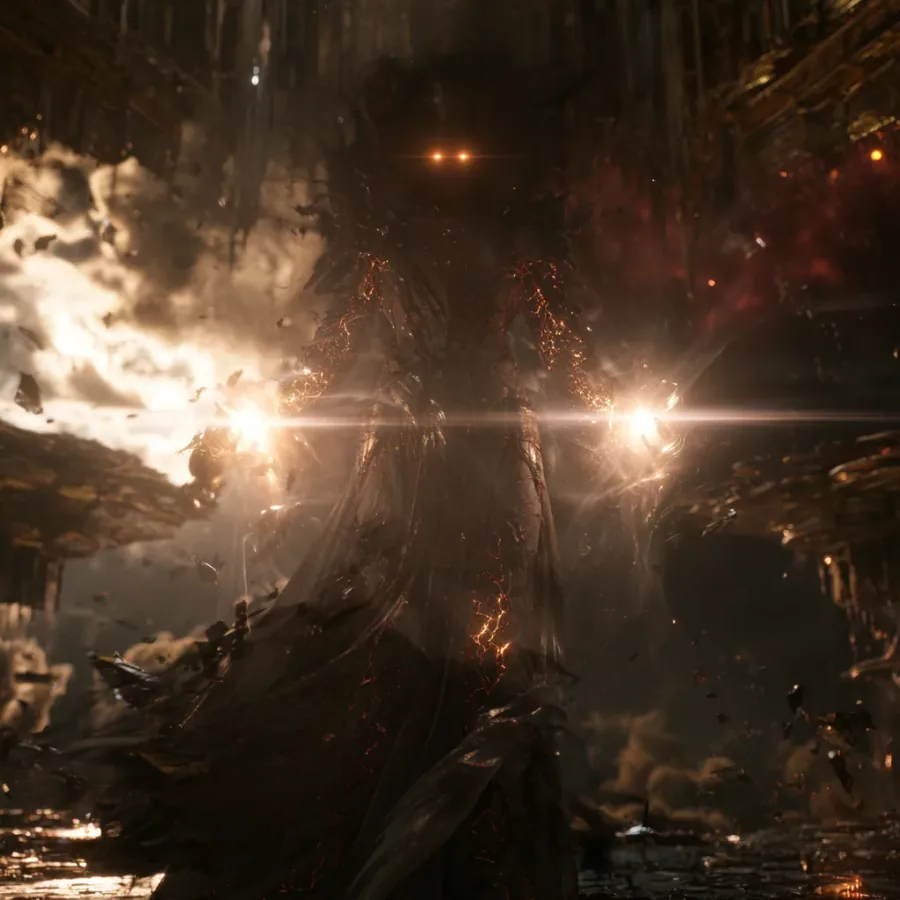
understand was a portal-grammar. The Ember at the heart of it was
already lit. The lit Ember had a sound. The sound was not unlike the
sound a held breath makes inside a chest that does not intend to let it
out.
Suren and Iliach were in the hall.
They were on their knees. They were not bound — Drexel did not need to
bind them; the binding was already inside them, in the hollow place
where their celestial signal had been thinned and tied off into the
black stones on the table. They were looking up at Grandex with the
faces of soldiers who had not yet finished asking for forgiveness for a
failure they had not yet had the time to commit. There was a third —
Vehrun, who had been holding the south rampart — already laid out
behind the working table, eyes open, breathing, quiet.
Three.
The Archangel saw the three before he saw the table. He saw the
table before he saw the portal. He saw the portal before the portal
began to close.
Drexel was already through it.
Phaeren, arriving at the threshold of the hall in the breath after
that, saw Grandex make the only mistake the chronicler is willing to
record him as making in any of his descents on any world. The
Archangel — the rage of him, the fire of him, the discipline of nine
ages of war — chose, in that one breath, between the warlock and the
three. He did not choose by reason. He chose the way fathers choose. The
attendance turned to the three.
The portal closed behind him as he turned.
The Ember went dark in its setting.
The warlock, by every measurement Phaeren has since been able to
make, had a head start of some unknown count of months on the other
side of a door no order on Kolonoth could open.
The Archangel did not speak in the hall.
The attendance settled — Phaeren felt this; Phaeren is the only living
witness to this, and it is the part of the account he has been most
careful with — settled beside Suren first, because Suren was nearest.
The order's small careful warming of attention came down on the place
where Suren had once carried his name, and on the place at the order's
mark where the bond had been kept. The settling held for a long time.
The fire in the hall did not move while it held. Phaeren could not feel
what passed between the Archangel and the angel, because the order's
language for that exchange is not given to those still standing.
Suren did not answer.
Suren could not answer. Whatever Drexel had taken from him
had been taken cleanly, the way a surgeon takes a thing that cannot be
left in. What remained in Suren was Suren's body, and Suren's breath,
and the faintest possible flicker of Suren's memory of having
been Suren. The flicker did not rise to recognition. It did not rise to
speech. It rose, if at all, to the level of an animal that has been
made tame by long captivity and has begun to forget that there is any
other state to be in.
The attendance moved to Iliach.
Iliach was the same.
Vehrun was the same.
The Archangel did not weep. The order would, later, write that he did
not weep — and the order is correct in the literal record, but the
order is wrong in the accounting. There are things an Archangel does
that are not weeping and that nevertheless take from him what weeping
takes from a mortal. Phaeren felt that thing happen. He has not
described it. He has said only that the air in the hall, for the
duration of it, did not move, and that when it began to move again, it
moved differently — as if the world had agreed, in the
interval, to breathe with one less of itself.
The fortress burned.
It did not burn the way mortal fortresses burn. The Archangel did not
draw the greatsword for it. He did not need to. He simply permitted
the heat that had been held back through the descent to come forward — and
the stone, and the timber, and the warlock's working table, and the
ledger, and the small carved figures on the shelf, and the portal-
grammar of black stones that had served their purpose, all of them
agreed at once to no longer be what they had been. The Ember Drexel had
left behind was not in the hall. The portal had taken it with him; that
was the thing he had not been able to part with, even at speed.
What remained, at the end of an hour, was a perfect circle of ember
and ash a quarter of a mile across, and at its centre, three angels who
were not dead.
The order came for the three. Phaeren stayed behind for the
Archangel.
Grandex did not speak when the order arrived. He did not speak when
the three were lifted. He did not speak when Tireth, the eldest of his
twelve still standing, came forward in the small careful gesture the
order reserves for the worst nights — the laying of an attendance at
the side of an Archangel who has been made to count a loss. The
attendance was not received. The Archangel did not register Tireth. He
did not register the three being carried away. The room's attention had
narrowed, instead, to the patch of ash where the working table had been
— and Phaeren has said, in private, that the narrowing was not anger.
Anger came afterwards. The narrowing was something quieter and more
terrifying. It was the narrowing of a being who had just discovered, in
his own house, a door he had not been given the key to.
He did not leave for three days.
The order tried, on the second morning, to convince him. Tireth tried;
Phaeren tried; even the Divine Angel who had come down briefly from the
threshold tried. Grandex did not refuse them in words. He did not refuse
them in any visible motion. He simply did not go. The figure of him
held in the embers, a pace from where the working table had been, the
greatsword sheathed about him and the heat of his attendance gathered
into the small careful unmoving column it had been gathered into for
two days, and the embers around the place where he stood did not cool,
because the world was not yet prepared to let them.
On the second night, the rain came.
Phaeren remembers the rain because rain was the first thing that, in
three days, behaved on the plain the way rain behaves anywhere else. It
fell on the embers, and the embers hissed, and the steam rose, and for
a moment the perfect circle around the Archangel was visible from the
ridge as a single white shape against the dark of the plain. The
Archangel did not move under the rain. The figure of him did not raise.
The figure of him did not turn. He did not, by any motion the order
saw, acknowledge that the world was attempting to wash the descent off
him.
On the third morning, Phaeren went to him.
He went without permission. The order's protocol for an Archangel in
silence is to wait for the silence to break itself; Phaeren has never
been good at the protocol, and the order has long ago accepted this
about him. He walked into the circle. The embers under his boots did
not burn him. They knew his name. He stopped a pace behind the
Archangel's attendance, the way he had stood for two ages, and he did
not speak.
Grandex spoke first.
It was the only thing he said in the three days.
Alive.
Not whole.
Not here.
Phaeren did not answer. There was no answer. The Archangel was not
asking him a question; the Archangel was placing the words down in
front of himself, the way a man places a weight he intends to carry for
the rest of his life and wants to know the shape of it before he picks
it up.
Phaeren stayed beside him until the sun, on the third day, lifted
fully off the ridge.
Then the figure of him moved. The figure walked off the plain, and
the embers behind him at last went grey.
The fortress on Kolonoth has not been rebuilt. The plain west of it is
not farmed. Mortals will not approach the circle, and the order has
not asked them to. There are nights, the people of the nearest village
say, when the wind off the plain comes warm even in winter — and the
warmth is not natural. The warmth has the same quality the embers had,
on the morning Phaeren walked into the circle, and stood, and waited,
and was not burned.
Phaeren the Burned has, since that night, never used the greater part
of his name in his own mouth. He answers to Phaeren. The
Burned is something he carries; he does not say it. The order
understands. The order has stopped asking him to.
The chronicler, writing this account, will not pretend the descent was
a victory. There are no victories in the account of a descent that ends
with three of the order's twelve alive in the wrong place, the warlock
through a door that closed behind him, and the Archangel of Fire
standing in a field of his own embers for three days without leaving.
The chronicler will say only this. The architecture of the worlds, on
the night the fortress fell, learned a new shape — and the Archangel of
Fire, on that same night, learned that there were doors in his own
house he had never been told existed, and that he would, from that
night onwards, spend the rest of his long burning life trying to find
the rest of them before they were used against him again.
Recorded by the Twelfth of Kolonoth, under the seal of Phaeren the Burned.
Three angels alive. Three angels not whole. Three days in the embers, and a door no order had been given the key to.