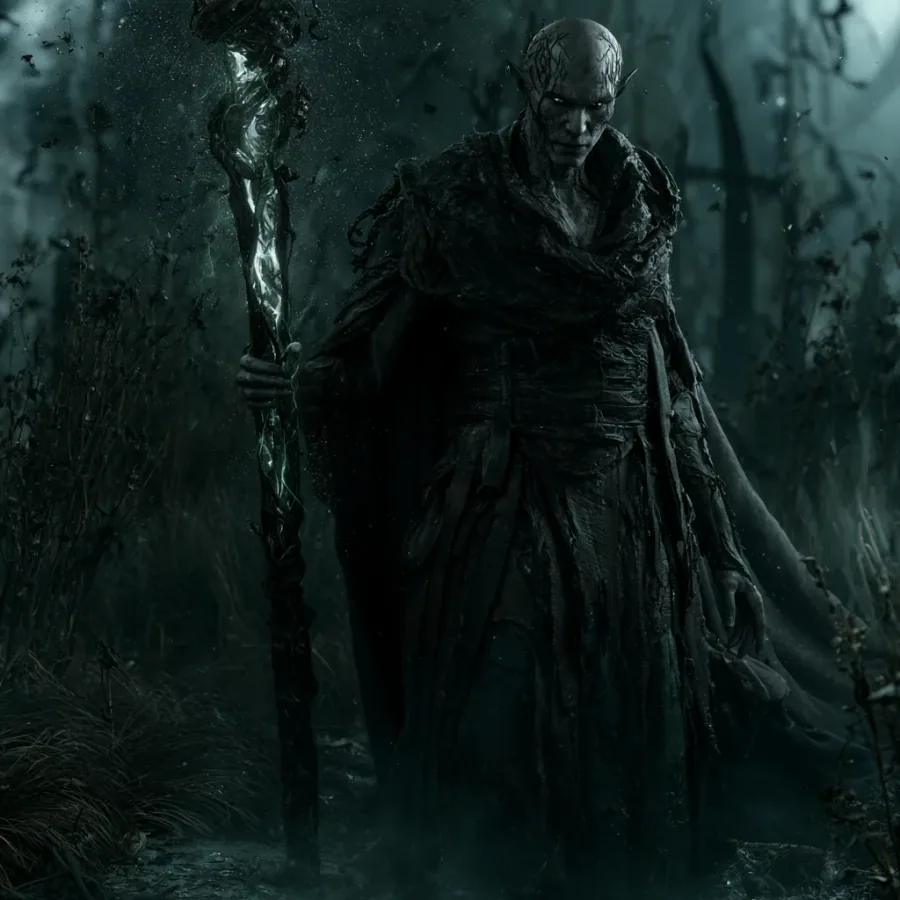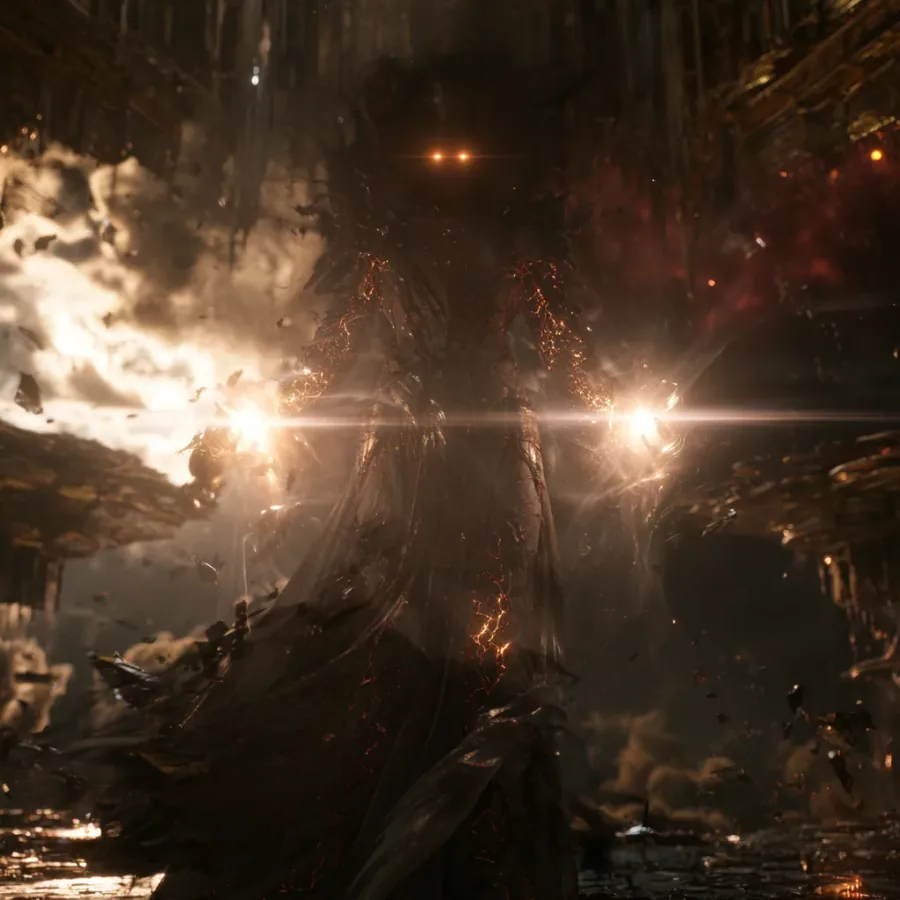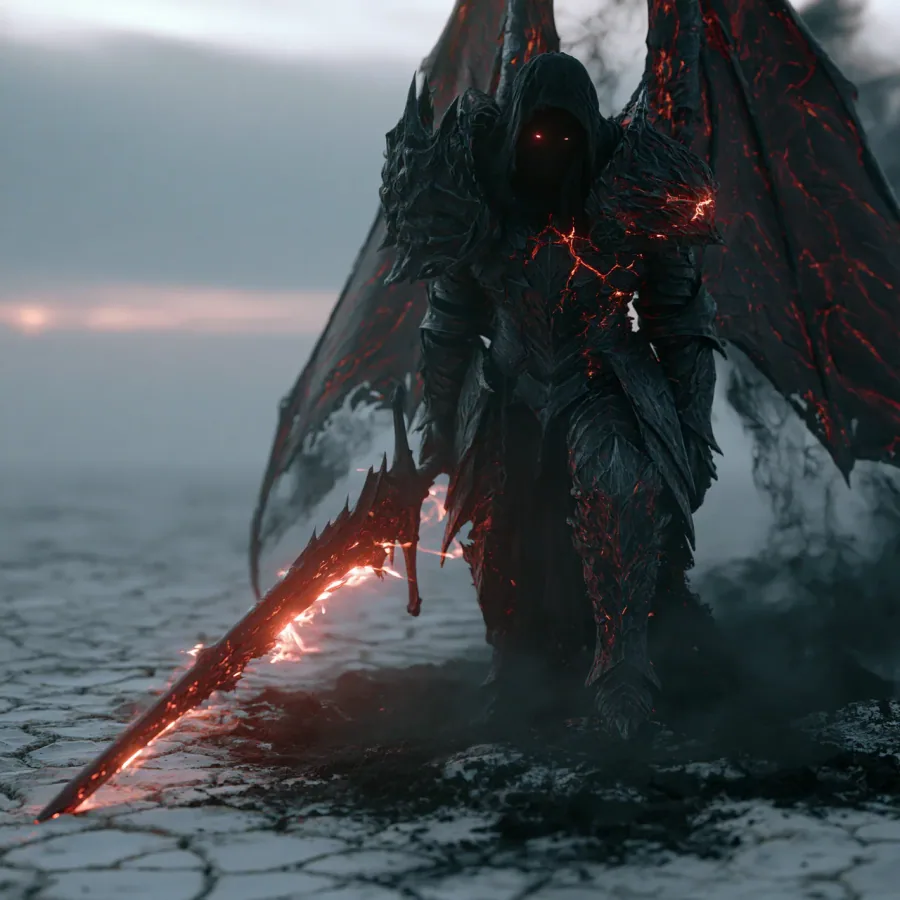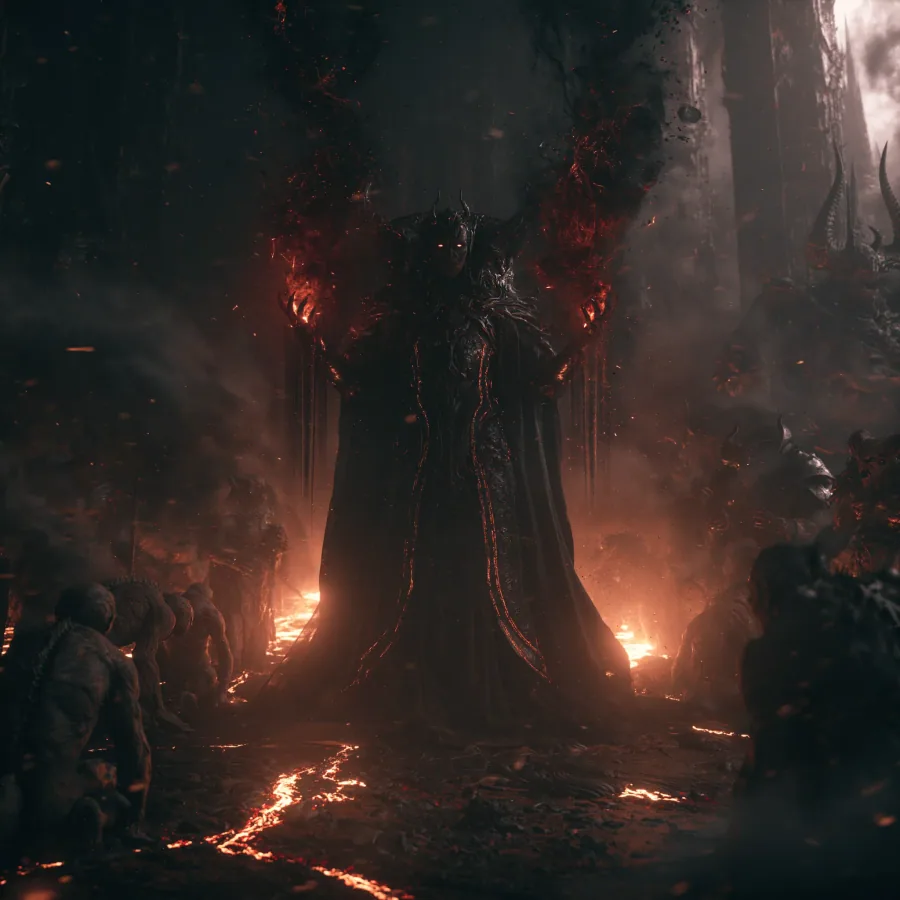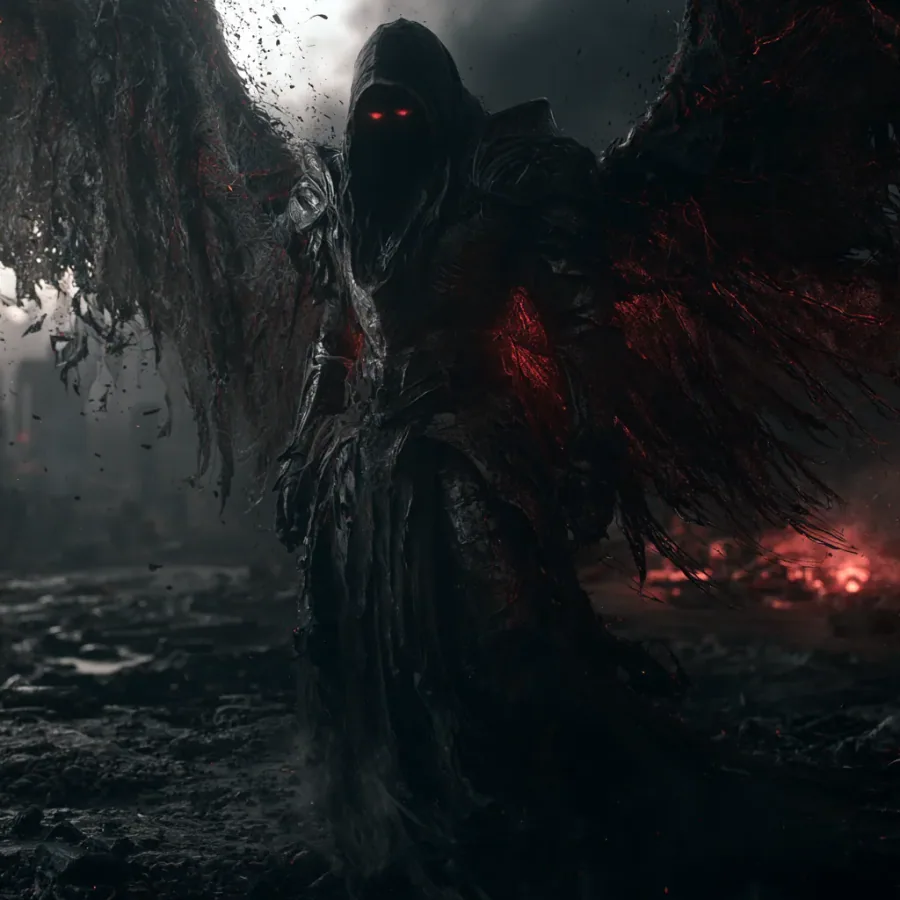
Krozar was once an Archangel like any of the others, with a blessing the celestial scribes have since deliberately erased — as if even remembering it correctly had been judged too dangerous. What remains is only what he became.
He had begun to think. He saw the Archangel hierarchy and read prisons where he had once seen purpose. He saw angels as soldiers chained to oaths they had never been allowed to refuse, and mortals as temporary creatures trapped in systems they were not even allowed to question. Far below him, in the depths of the Infernum, Varythos watched him think — and gently, without curses, allowed certain conclusions to grow uninterrupted in the silences where divine voices usually intervened. By the time Krozar arrived at the lethal idea that destruction was the only freedom, he believed it was his own.
He acted on it. He did not lose his blessed world Velkaris in battle or to demonic incursion. He destroyed it himself, end to end, as an act of belief. He razed the cities he had been sworn to protect and emptied the souls he had been blessed to watch over.
The Gods stripped him of his original blessing the instant they understood. But Varythos was waiting, and gave him another. He did not become a demon. He did not fall to mortal status. He remained — and remains — an Archangel, now aligned with the Infernum, and to himself the only one in creation at last free. He has begun, in this season, to take an interest in the war he has been pretending not to watch.
Bearing
Krozar was the coldest being in the chronicle. The chroniclers who attempted him in the long count of years after Velkaris arrived, almost without exception, at the same word and the same difficulty: that the cold in him was not absence and was not hatred and was not the dull negation of demonic nature. It was a coherence. He had thought his way to the position he now held with such patient rigor that nothing in him remained ambivalent, and the cold was simply the temperature at which a being who has resolved every internal contradiction must, in the end, settle. He was not raging. He had never been raging. Rage was a tool used by beings who had not yet finished thinking; Krozar had finished.
His cosmology was a single sentence, and he had spoken it only once that the chronicle could verify. If balance is a chain, then destruction is freedom. The sentence sat at the centre of him the way a stone sits at the centre of a still pond — and every other position he held arranged itself, as a matter of geometry, around it. He did not consider the Archangels servants pretending to be rulers in order to insult them; he considered the description accurate. He did not regard mortals' fear of death as cowardice; he regarded it as the proof that consequence had been used, by every higher order, as a shackle on what creation was capable of becoming if it could be coaxed out of fearing its end. The sermon he had given his twelve on the morning he razed Velkaris had been, by every account that survived, calm. It had been delivered in the same tone he had used to bless his angels at their orderings. Three of the twelve had refused. He had unmade those three before he had unmade the world. He had not, in the centuries since, named them aloud.
Varythos's second blessing had not transfigured him. Krozar after the fall was, in posture and in voice, the same Archangel he had been before, only now answering a different geometry. The fact disturbed celestial scribes more than the fall itself. They had been prepared for a demon in an Archangel's silhouette; they had not been prepared for an Archangel still recognisably himself, whose blessing was simply re-keyed. The moment in which that re-keying had been given, deep inside the Infernum, was rendered in the surviving accounts as a quiet exchange rather than a triumph — and the single question Krozar had asked Varythos at its close, the question Varythos had refused to answer, had remained unanswered ever since. The chronicler does not know the question. The chronicler suspects the question was the one Krozar had been asking himself for the entire age that preceded it.
His private chamber inside the Infernum, the chamber permitted to no Infernal General and to almost no wraith, was described, in the few accounts that exist, only by what was not in it. There was no throne. There was no mirror. There were no banners, no ledgers, no instruments of war, no relics of his fall. There was a low table. On the low table, set in a careful row whose order had not changed in centuries, three small objects from Velkaris that no being beyond Krozar himself had been permitted to examine. The three had not been destroyed. They had not been displayed. They had not been, in any sense the chronicler could verify, looked at often. They were simply present, as a record is present, in a room whose owner had decided, with the same coherence he had brought to every other decision, that he would neither dispose of the record nor consult it. The objects had no names in any tongue still spoken. The chronicler will not invent names for them.
His interior, at the close of S5, was not yet animated toward Celesterra. He was not yet acting. He had, the chronicler is obliged to note, begun to look, and looking in a being of Krozar's coherence is itself a kind of motion, because nothing in him looked idly. The seasons ahead would record what the looking became. Until then he held the position he had held since Velkaris ended: the only being in creation, in his own reading, who was at last free; the coldest weapon in Varythos's keeping; the brother who had not been forgiven and had not asked to be; the Archangel of Destruction, sitting in a chamber where no light fell, with three small objects on a low table in front of him, declining either to look or to look away.
Bearing
Krozar was the coldest being in the chronicle. The chroniclers who attempted him in the long count of years after Velkaris arrived, almost without exception, at the same word and the same difficulty: that the cold in him was not absence and was not hatred and was not the dull negation of demonic nature. It was a coherence. He had thought his way to the position he now held with such patient rigor that nothing in him remained ambivalent, and the cold was simply the temperature at which a being who has resolved every internal contradiction must, in the end, settle. He was not raging. He had never been raging. Rage was a tool used by beings who had not yet finished thinking; Krozar had finished.
His cosmology was a single sentence, and he had spoken it only once that the chronicle could verify. If balance is a chain, then destruction is freedom. The sentence sat at the centre of him the way a stone sits at the centre of a still pond — and every other position he held arranged itself, as a matter of geometry, around it. He did not consider the Archangels servants pretending to be rulers in order to insult them; he considered the description accurate. He did not regard mortals' fear of death as cowardice; he regarded it as the proof that consequence had been used, by every higher order, as a shackle on what creation was capable of becoming if it could be coaxed out of fearing its end. The sermon he had given his twelve on the morning he razed Velkaris had been, by every account that survived, calm. It had been delivered in the same tone he had used to bless his angels at their orderings. Three of the twelve had refused. He had unmade those three before he had unmade the world. He had not, in the centuries since, named them aloud.
Varythos's second blessing had not transfigured him. Krozar after the fall was, in posture and in voice, the same Archangel he had been before, only now answering a different geometry. The fact disturbed celestial scribes more than the fall itself. They had been prepared for a demon in an Archangel's silhouette; they had not been prepared for an Archangel still recognisably himself, whose blessing was simply re-keyed. The moment in which that re-keying had been given, deep inside the Infernum, was rendered in the surviving accounts as a quiet exchange rather than a triumph — and the single question Krozar had asked Varythos at its close, the question Varythos had refused to answer, had remained unanswered ever since. The chronicler does not know the question. The chronicler suspects the question was the one Krozar had been asking himself for the entire age that preceded it.
His private chamber inside the Infernum, the chamber permitted to no Infernal General and to almost no wraith, was described, in the few accounts that exist, only by what was not in it. There was no throne. There was no mirror. There were no banners, no ledgers, no instruments of war, no relics of his fall. There was a low table. On the low table, set in a careful row whose order had not changed in centuries, three small objects from Velkaris that no being beyond Krozar himself had been permitted to examine. The three had not been destroyed. They had not been displayed. They had not been, in any sense the chronicler could verify, looked at often. They were simply present, as a record is present, in a room whose owner had decided, with the same coherence he had brought to every other decision, that he would neither dispose of the record nor consult it. The objects had no names in any tongue still spoken. The chronicler will not invent names for them.
His interior, at the close of S5, was not yet animated toward Celesterra. He was not yet acting. He had, the chronicler is obliged to note, begun to look, and looking in a being of Krozar's coherence is itself a kind of motion, because nothing in him looked idly. The seasons ahead would record what the looking became. Until then he held the position he had held since Velkaris ended: the only being in creation, in his own reading, who was at last free; the coldest weapon in Varythos's keeping; the brother who had not been forgiven and had not asked to be; the Archangel of Destruction, sitting in a chamber where no light fell, with three small objects on a low table in front of him, declining either to look or to look away.