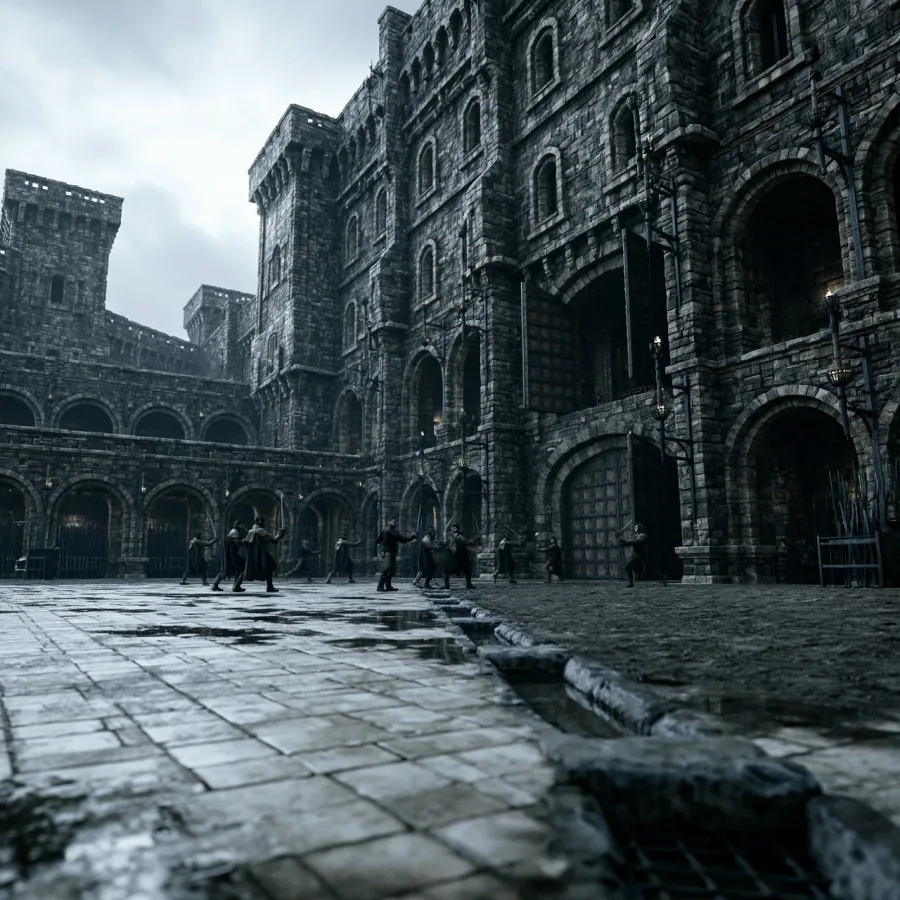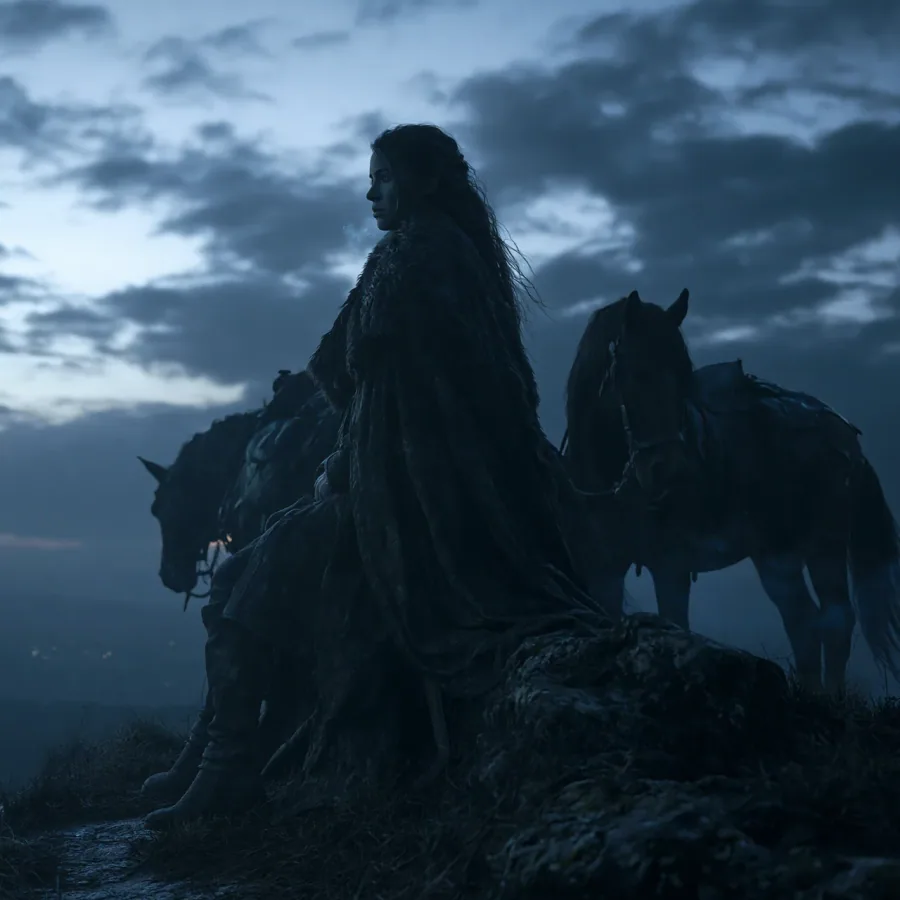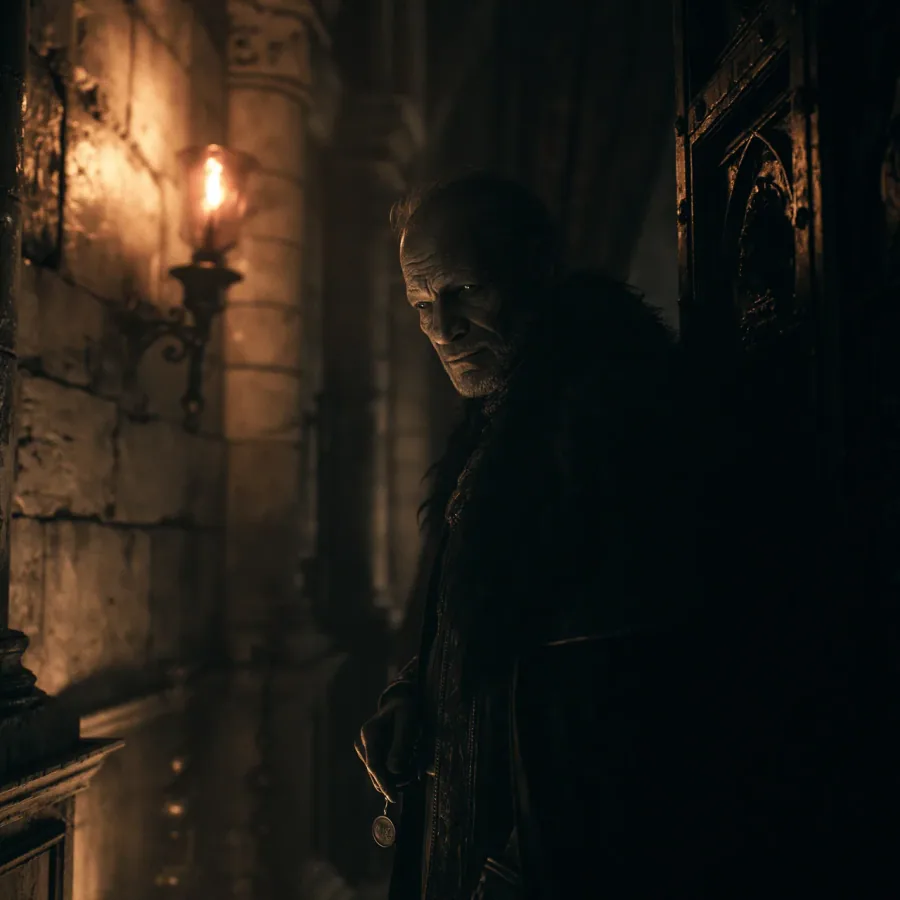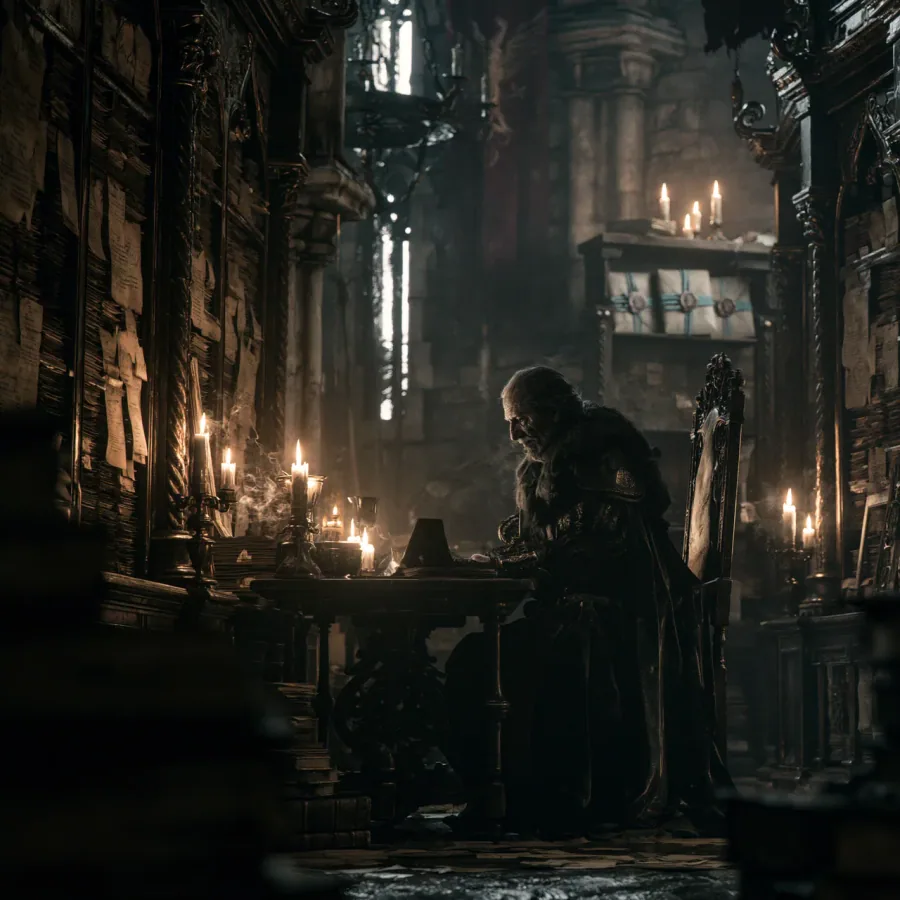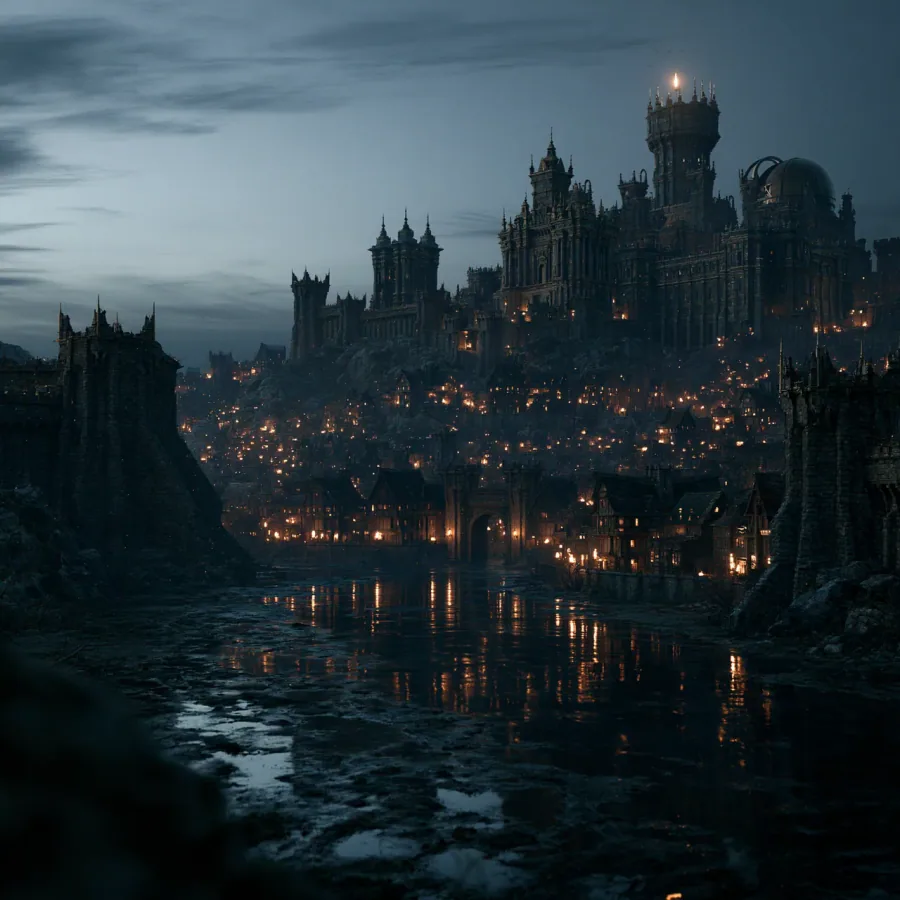
Vextar was the capital of Krypton and had been, for nine generations of the Halvern line, the seat from which Krypton reigned over the eastern half of Celesterra. It sat on a low rise above the Vextar river, three days' ride west of the Shadowglade range, at the meeting of the eastern road and the northern pass. The city was old. The city was, by the time of the chronicle, no longer the city its older walls had been built for.
The four quarters
The city was divided, by the practice of its inhabitants more than by any decree, into four quarters. The Sword Quarter, in the west, was the older military district — barracks, the parade square, the Royal Sword-School at its eastern edge. The Counted Quarter, in the south, was the merchant district — the long ledger-houses, the south gate where the Sereveld caravans came in, the small chapel of the bookkeepers' guild that had been kept open every day of the year for two centuries. The Lamp Quarter, in the north, was the residential district of the lesser nobility and the senior administrative servants — quiet streets, walled gardens, the houses of the Lord-Chancellor and the Lord-General and the city's three judges. The Crown Quarter, in the east, held the palace itself, the council chamber, the royal observatory, and the king's tower.
The four quarters had been, in the city's older centuries, quite separate. By the chronicle's beginning, the separations had softened. Merchants lived in the Lamp Quarter. Officers' families lived in the Counted Quarter. The Crown Quarter alone kept its boundaries strictly, and kept them less by decree than by the simple fact that no one without formal business in the palace had any reason to enter it.
The king's tower
The king's tower stood at the inner edge of the Crown Quarter, joined to the council chamber by a covered bridge that the older Halverns had walked daily and the current king walked perhaps four times a season. The tower was tall — six storeys, in a city whose other towers ran to four — and was visible from every quarter and from the walls beyond. The lamp at the king's chamber was, by tradition, lit at sunset and unlit at dawn, every day of the year, regardless of whether the king was sleeping in the chamber. The lamp had become, across the king's seven silent years, the city's one reliable certainty: that the king was, in some sense, still attending. Children in the Lamp Quarter were taught to look for it, in much the same way they were taught to look for the morning star.
The council chamber
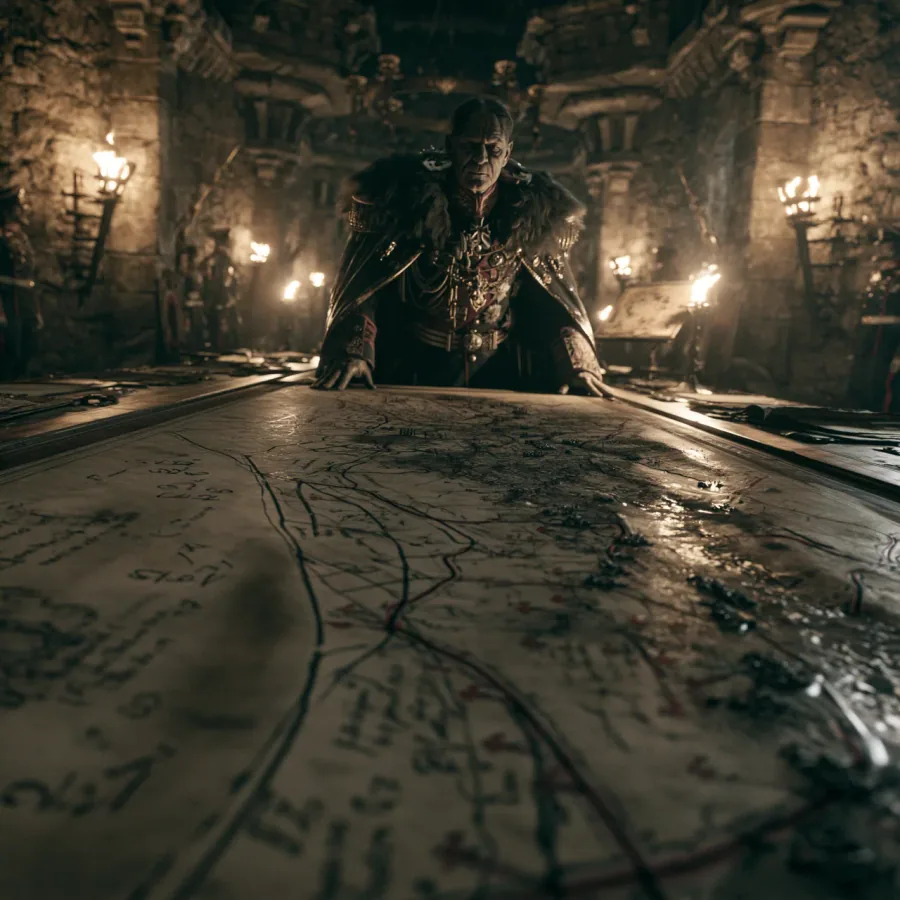
The chamber held the king and the Council of Five at a long oak table whose grain ran east-west by the seating tradition of three centuries. The king sat at the eastern end. The five hereditary lords sat three on the south, two on the north. The Lord-General sat at the king's right. The Lord-Chancellor, in his function as keeper of the letters, sat at the king's left. The Crown Princess, in her years of attendance, had sat in the small gallery above the table from which she could see, without being directly addressed, who agreed with whom in the order of speaking. She had been counting, the chronicler implies, since her early twenties.
Stance toward the chronicle
Vextar was, at the chronicle's beginning, a city that had not yet been told it was at war. Its quarters were full. Its caravans came in. The lamp burned at the king's chamber every night. By S6, the council chamber would receive Major Raven's two-handed letter, and the king would say nothing for an hour, and the kingdom would not yet know that the silence was no longer the discipline of patience but the patience of a man who could not quite decide what the chronicle had become. By S17, the Sword Quarter would be drilling at twice its peace rate, and the Counted Quarter would be auditing every Sereveld ledger that crossed the south gate, and the Crown Quarter would be receiving envoys from three kingdoms that had not, in living memory, sent envoys at the same time.
By S20, the eastern walls would burn twice in a single night, and the kingdom would, at last, look up.